
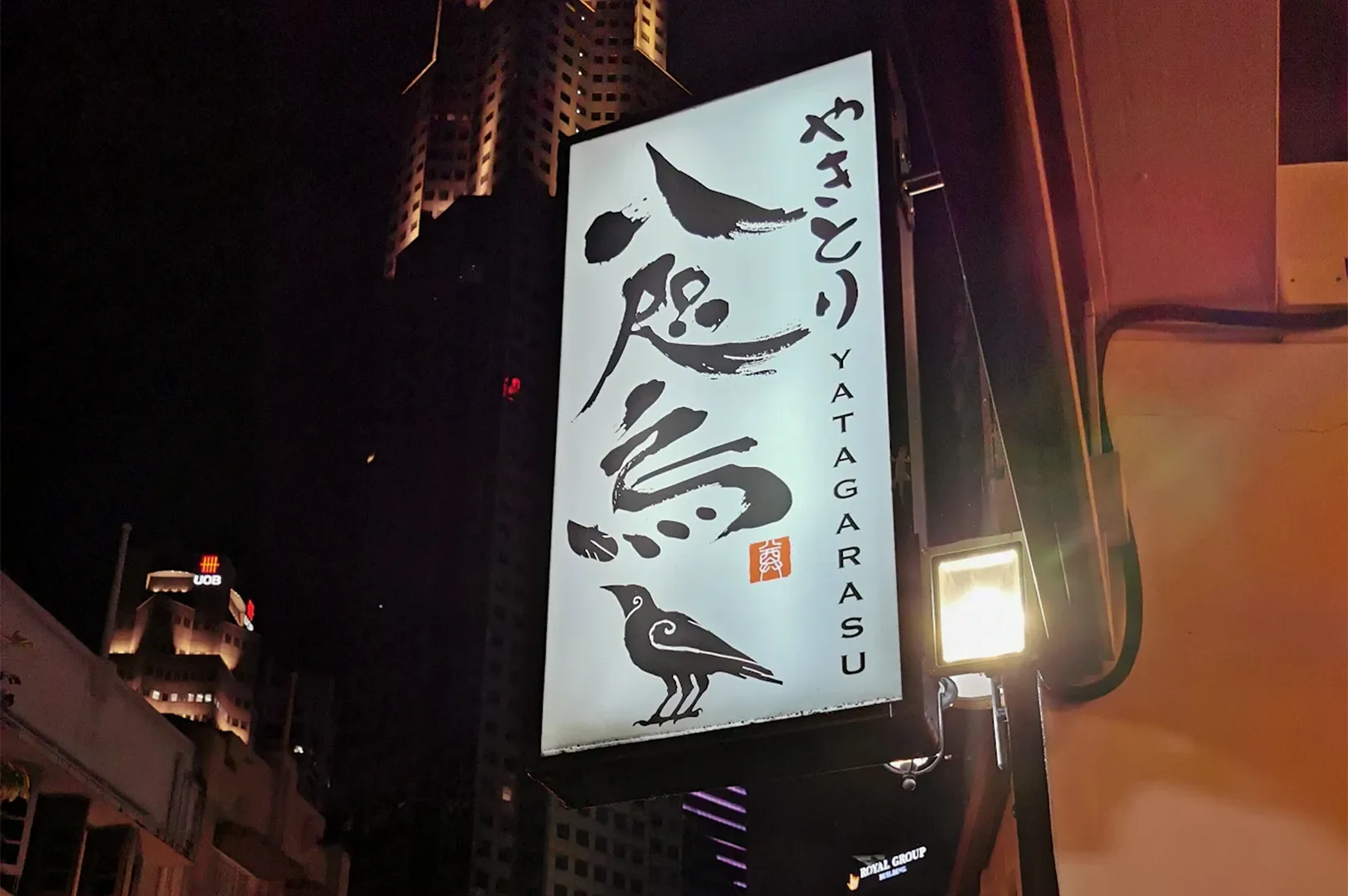
At first glance, yakitori yatagarasu reads like a name drawn from Japan rather than a menu. It carries weight before food arrives, hinting at something older than technique. In Singapore, where restaurants often explain themselves quickly, Yatagarasu does the opposite. It asks the diner to slow down, to notice charcoal, rhythm, and heat, then to notice the name again.
Several high-end or traditional yakitori restaurants use the name “Yatagarasu” to invoke the bird’s sacred status. Yakitori restaurants often adopt the Yatagarasu as a symbol of direction and excellence in their craft. Yatagarasu, although not a culinary term, is linked to yakitori through Japanese culture and branding.
Yatagarasu refers to the eight span crow, a three legged crow from japanese mythology, written as 八 咫 烏 in early surviving documentary records. It is not simply a bird. It is a symbol, a guide, a form of divine intervention believed to bridge heaven and earth, sun and shadow, human affairs and the will of the gods. The three-legged crow mythology is prevalent in the area of East Asia, including Japan, China, and Korea, each with their own interpretations and representations in local traditions. Understanding this myth clarifies why yakitori here is not casual grilling, but something closer to ritual.
The Three Legged Crow: Origin of Yatagarasu in Japanese Mythology
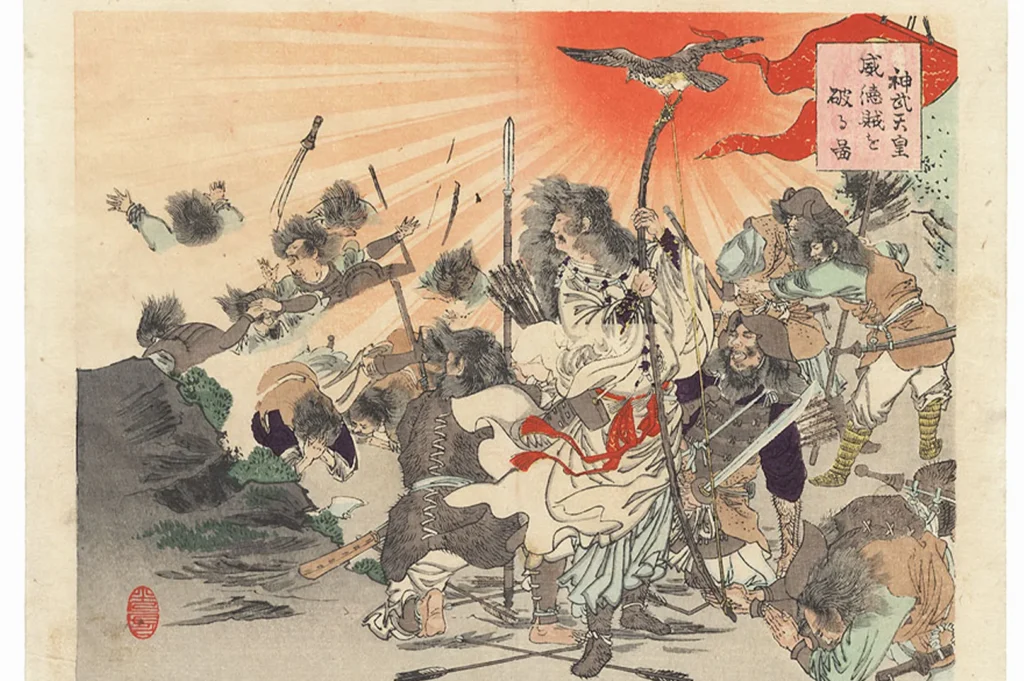
In ancient times, the three legged crow was believed to appear during moments when humans lost their way. According to generally accepted accounts in Japanese myth and historical texts, this great crow was sent by the sun goddess Amaterasu, a deity central to Japanese mythology, to offer guidance. Yatagarasu is also recorded in the Kojiki and Nihon Shoki, ancient Japanese chronicles.
While most birds stand on two legs, the third represents balance beyond the visible, often interpreted as sun, moon, and earth, or heaven, humanity, and the unseen. The three legs of Yatagarasu symbolize heaven, earth, and humanity, often described as ‘brothers’ born from the same sun, representing harmony and kinship. This three legged form symbolized movement between realms, a creature able to walk where others could not. Yatagarasu is believed to be an incarnation of Kamotaketsunumi no Mikoto (or Kamo Taketsunumi).
The golden crow is said to have led Emperor Jimmu during his initial journey eastward to establish Yamato, guiding him through mountains, danger, and battle. Without this great bird, the emperor would have been lost. Yatagarasu guided Emperor Jimmu from Kumano to Yamato, where he founded the first national capital, and is associated with the establishment of the Yamato Imperial Court by Emperor Jimmu. Today, the crow is worshiped at sites such as Kumano Hongu Taisha Shrine, where statues stand as reminders of divine guidance. The crow is not feared as an omen of death, as in some cultures, but revered as a servant of the gods.
Physical Characteristics of the Eight Span Crow
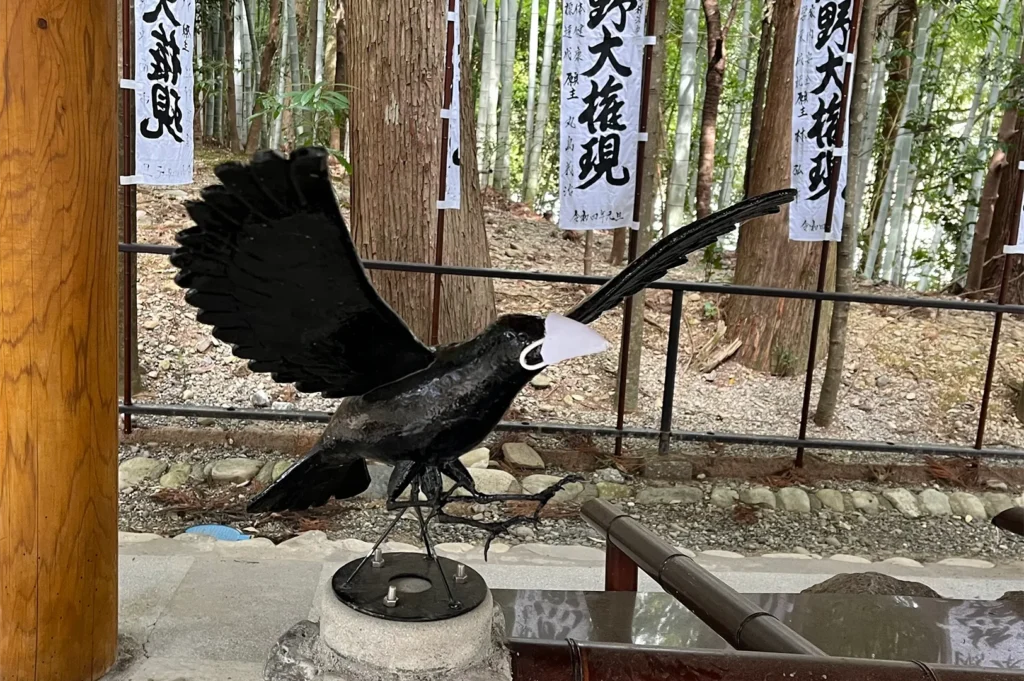
The eight span crow, or Yatagarasu, is a powerful symbol in Japanese mythology, known for its three legs representing heaven, earth, and humanity. Originally depicted with two legs, the crow’s third leg was added later, emphasizing its divine role as a guide sent by the sun goddess Amaterasu. This legendary bird is believed to have led Emperor Jimmu on his journey to establish Japan’s first capital.
Yatagarasu is closely associated with the sun and cosmic balance, often depicted alongside sun or moon motifs in art and sacred sites like Kumano Hongu Taisha Shrine. Its three-legged form symbolizes a connection between realms, embodying magic and guidance that bridges the divine and human worlds. This powerful imagery inspires reverence and respect in Japanese culture.
Visiting places that honor Yatagarasu, one can feel its mystical presence, a legendary figure that moves between earth and heaven with ease. The crow’s enduring symbolism reflects the harmony of the same sun that shines over fire, guiding both emperors and yakitori chefs alike in their disciplined craft.
Eight Span Crow, Three Legged Symbol, and the Discipline of Fire
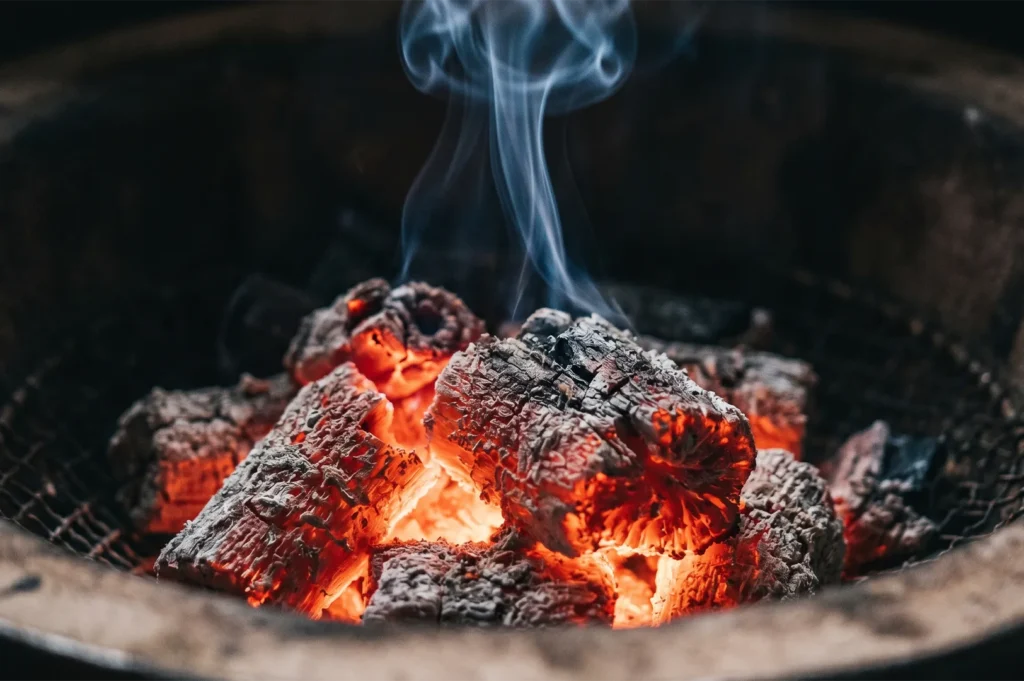
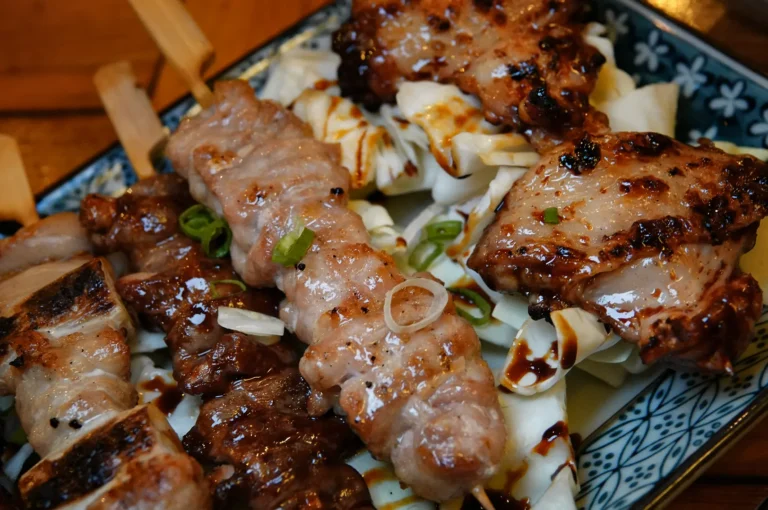
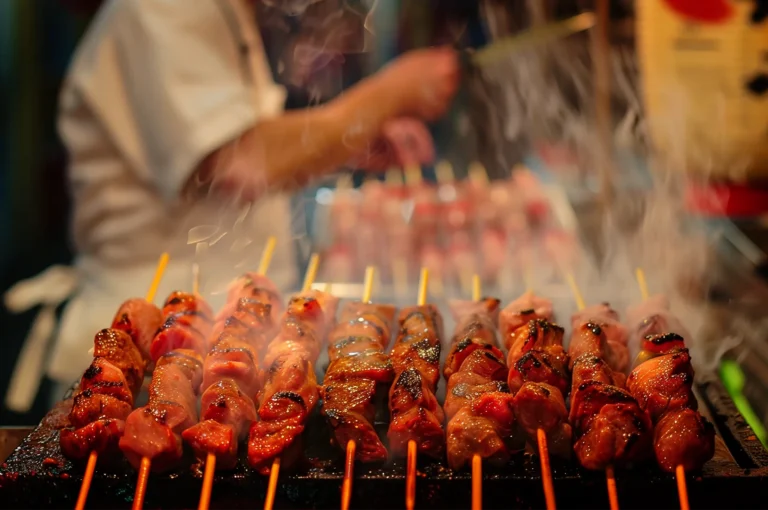
Yakitori is a Japanese cuisine featuring bite-sized pieces of meat, primarily chicken, skewered and grilled over fire, usually using charcoal.
Why does this matter for yakitori?
Because charcoal cooking, at its highest level, is also about guidance rather than force. Fire, like myth, cannot be dominated, only understood. In yakitori yatagarasu, charcoal is not decoration. It is a working partner.
The eight span crow was said to be vast in length, large enough to block the sun. Here, ‘span’ refers to a traditional unit of length, used historically in Japan to measure distance, similar to other units like the ata or yata. In the same way, binchotan charcoal shapes everything that happens at the grill. It sets tempo, limits error, and exposes hesitation. The chef does not fight it. He follows it.
This is where myth and method are quietly fused. The crow guided emperors. Charcoal guides the cook. A flare is not failure; it is information. Heat rising too quickly is not chaos; it is a message. Like the crow appearing at a critical moment, fire intervenes when timing matters.
Yatagarasu Singapore: Charcoal as Guidance, Not Control
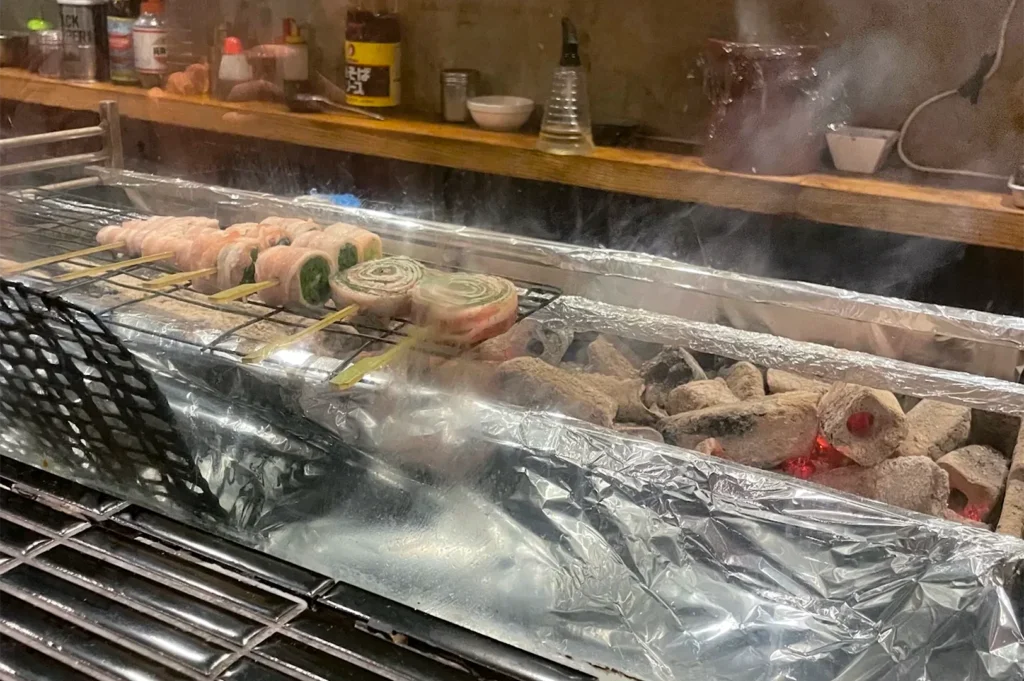
At Yatagarasu in singapore, charcoal is treated as something that carries intent. It is lit early, allowed to settle, observed. The grill is not a stage. It is a site of decision-making.
This approach mirrors how the crow functioned in Japanese mythology, not commanding, but representing direction. The chef does not rush skewers. He reads them. Each movement is measured. Each pause is deliberate.
Charcoal mastery here is defined by restraint. Smoke is kept clean. Flare is managed. Heat is distributed rather than concentrated. The result is yakitori that tastes complete, not aggressive, food shaped by listening rather than domination.
This philosophy distinguishes Yatagarasu from many modern grills that mistake intensity for depth.
The Great Crow, the Sun Goddess, and the Same Sun Over Fire
In myth, the three legged crow is tied directly to the sun goddess Amaterasu. In some interpretations, it is even described as her incarnation, or at least an extension of her will. The crow does not compete with the sun; it carries it.
Charcoal cooking operates under the same sun. Fire here is not destructive. It is illuminating. It reveals texture, fat, and timing. When done properly, it creates clarity rather than fear.
The crow symbol also appears in China, where similar myths link the crow to sunspots, cycles, and cosmic balance. Across cultures, the bird represents knowledge carried through flame and light. In that sense, yakitori is not far removed from myth. Both rely on repetition, discipline, and trust in forces larger than oneself.
From Emperor Jimmu to the Counter Seat
The story of Emperor Jimmu is often retold as a legend of conquest, but at its core it is about navigation, knowing when to advance, when to wait, when to follow guidance rather than ego.
That lesson translates easily to the grill. A skewer turned too early dries out. Too late, it burns. The chef’s job is not to assert dominance, but to align with timing. This is why yakitori rewards observation. You do not need explanation. You can see when the cook listens to the fire.
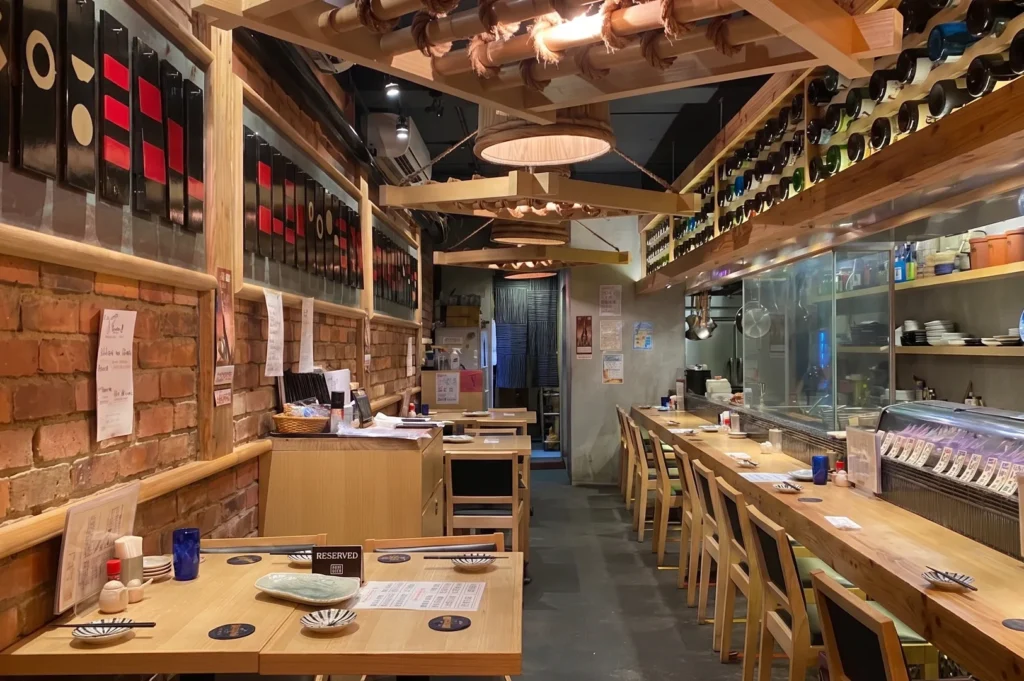
At Yatagarasu, this attentiveness defines the experience more than the menu itself. Food arrives when it is ready, not when expectation demands it.
The Crow as Symbol, the Grill as Practice
The crow has long been misunderstood outside Japan, associated with fear, darkness, or death. But in japanese tradition, Yatagarasu is protective. It appears when humans struggle. It offers a path.
This is why the name matters. Yakitori Yatagarasu is not branding by accident. It frames the restaurant as a place guided by tradition rather than trend, by myth rather than marketing.
Charcoal, like the crow, requires humility. Those who rush it are punished. Those who respect it are rewarded.
Closing: Guidance Over Spectacle
In the end, the value of Yatagarasu is not spectacle. It is alignment.
The three legged crow did not fight battles itself. It showed the way. The chef does not overpower the fire. He follows it. This is the quiet connection between myth and method, between Japanese mythology and modern yakitori in Singapore.
Yatagarasu is also used as an emblem by the Japan Football Association and appears in the logo of Japan’s national men’s and women’s soccer teams, symbolizing guidance towards victory. Yatagarasu has been depicted in various forms of popular media, including video game series such as Shin Megami Tensei and Persona, where players can create or fuse Yatagarasu as a character. Art books and guide books for these series often feature Yatagarasu as well.
For a deeper dive into the authentic skewers and the philosophy behind Yatagarasu, explore our main article on Yakitori Yatagarasu Hanare at Circular Road.