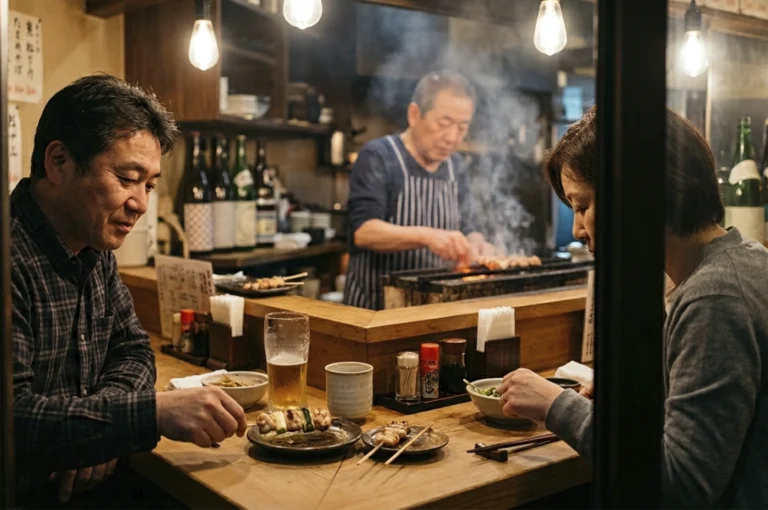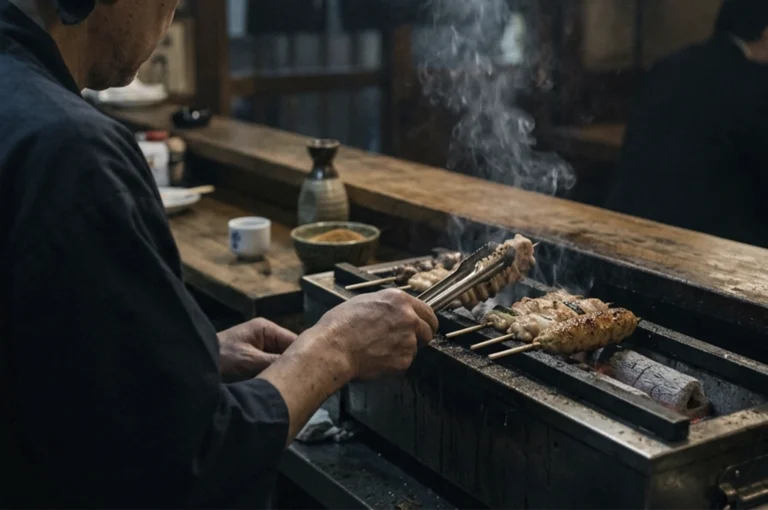
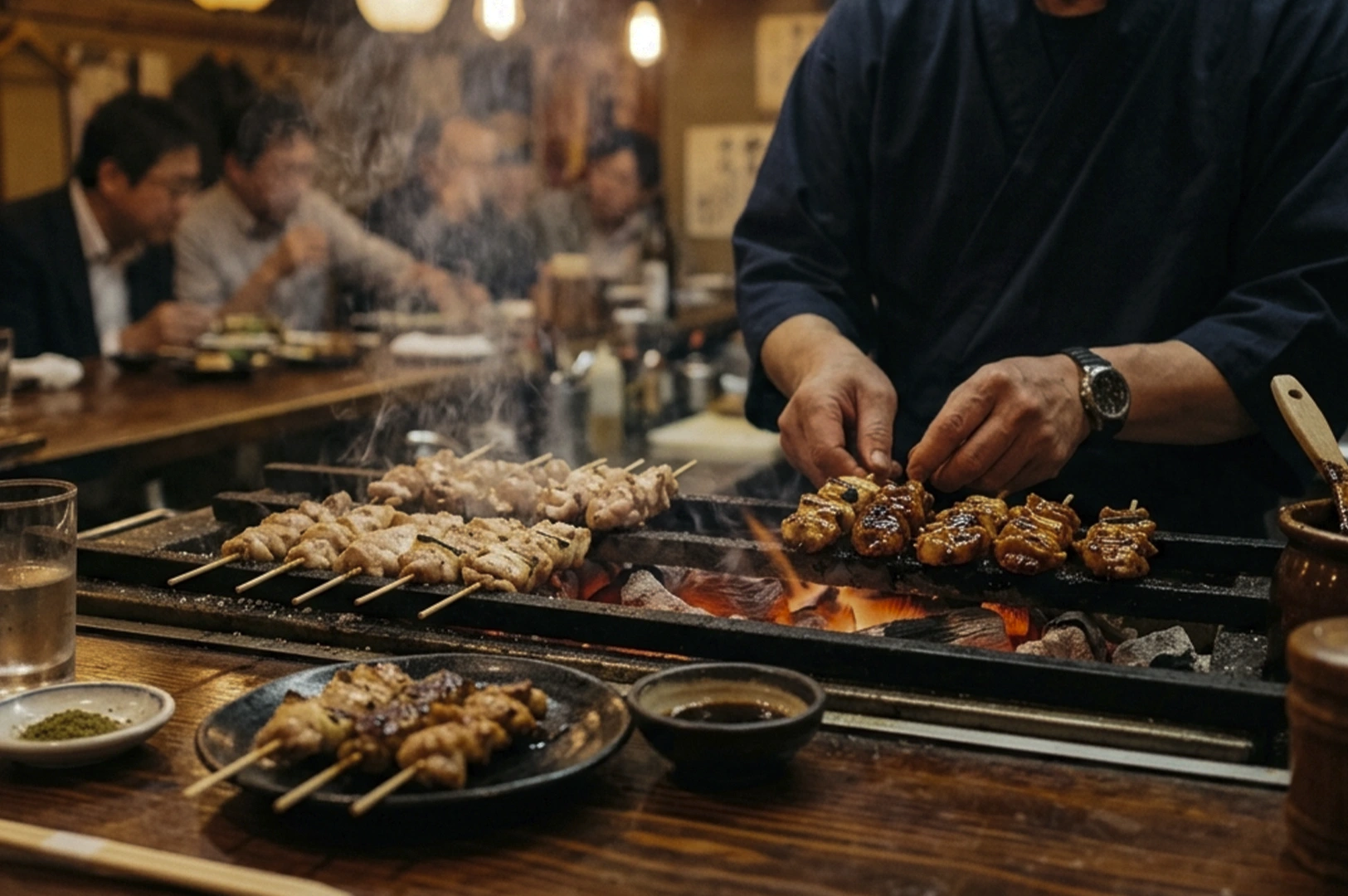
塩とタレ is a choice you may not notice at first, but it shapes the entire experience. When you sit at the counter, you might hear the soft question, or sometimes not even that. The chef decides, based on the cut, the fat, the moment.
Shio feels light, almost transparent. It allows the natural character of the meat to come through. You taste the slight sweetness of chicken, the gentle crispness of skin, the clean finish that lingers briefly before fading. It is often used for the first few skewers, easing you into the meal.
Tare, on the other hand, carries depth. It is brushed carefully, layer by layer, building a glaze that reflects the heat of the grill. There is a quiet richness to it, something that settles more fully on the palate. By the time it appears, your senses are ready for it.
You do not need to decide everything yourself. In fact, it is often more enjoyable to trust the flow. Notice how the chef alternates, how one skewer feels lighter, the next more rounded. There is intention in this balance.
If you are unsure, simply ask. There is no wrong choice here, only different expressions of the same craft.
Over time, you begin to recognise what suits each cut, but even then, the joy remains in the small surprise of each skewer placed before you.