
焼き加減 determines the quality of yakitori. It is assessed through visual, structural, and timing indicators rather than a single factor.
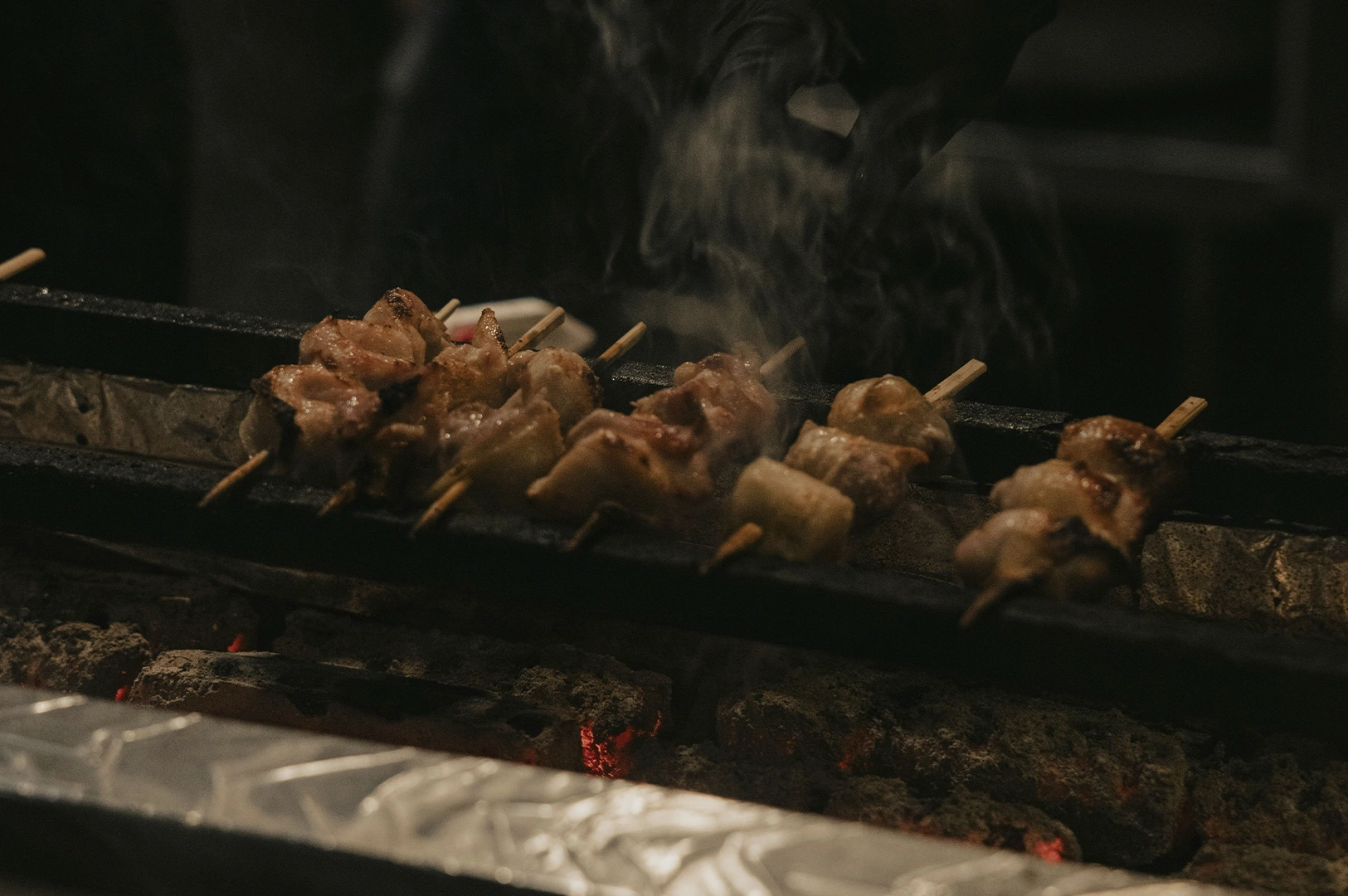
Surface appearance is the first reference point. Properly grilled yakitori shows even caramelisation without excessive charring. Slight blistering on the skin or edges is acceptable, but the overall structure should remain intact.
Fat rendering provides another indicator. In cuts such as chicken thigh or skin, fat should be partially rendered, creating a balance between crispness and moisture. Excess dripping or flare-ups suggest unstable heat control.
Texture is assessed through resistance. When lifted, the skewer should hold together without appearing rigid. Overcooked meat becomes firm and dry, while undercooked pieces lack structural integrity.
Timing between turns is also relevant. Frequent turning prevents uneven cooking and reduces the risk of burning. Long, unattended intervals typically result in inconsistent doneness. Sauce application offers additional insight. Tare should be layered gradually, allowing each coat to set before the next is applied. Thick, uneven glaze often indicates rushed preparation.
These indicators can be observed without technical knowledge. They provide a consistent framework for evaluating yakitori quality across different settings.
Accurate grilling is not defined by intensity of flavour alone, but by control over heat, timing, and structure.