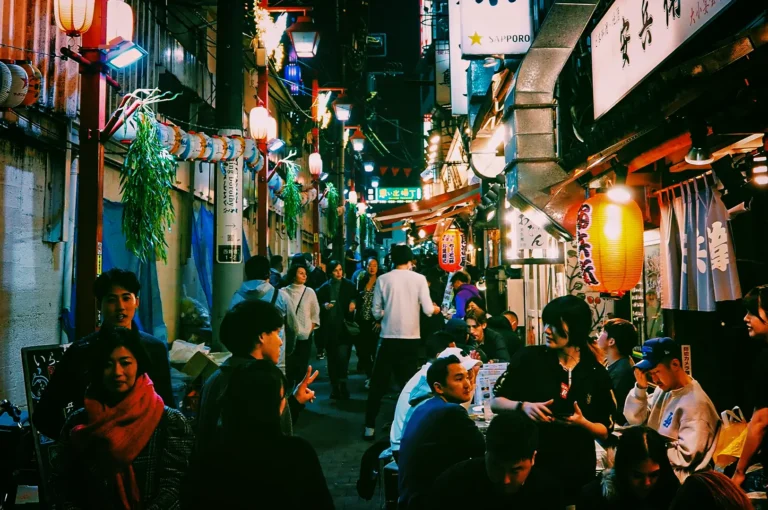

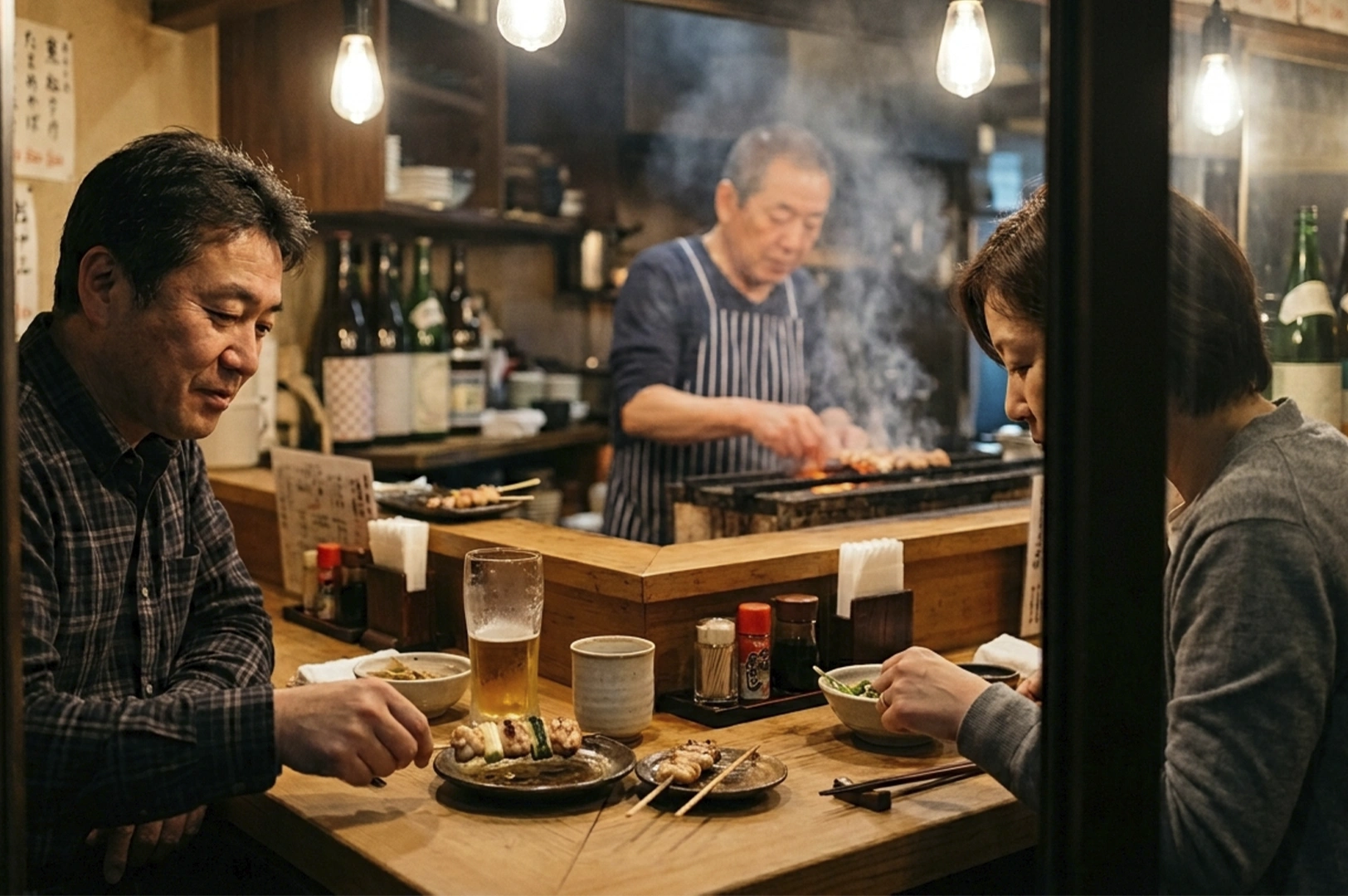
夜の流れ defines the structure of an izakaya evening. The environment is controlled to support steady pacing and consistent service. Lighting is low. Seating is arranged to maintain proximity without disruption.
Yakitori is served in sequence. Initial skewers are lighter, preparing the palate. Richer cuts follow. This progression ensures clarity of flavour and prevents fatigue.
Timing remains critical. Skewers are prepared in small batches and served immediately. This reduces holding time and maintains optimal texture. Diners are expected to respond by eating promptly after service.
The chef regulates pacing by observing the counter. Consumption speed, conversation, and ordering patterns inform the timing of subsequent skewers. This creates coordination between preparation and service.
Conversation remains present but restrained. The environment supports attention to food without eliminating social interaction.The izakaya format is structured for balance. Food, timing, and atmosphere are aligned to maintain consistency. Each element functions with purpose, contributing to a controlled and continuous dining experience.