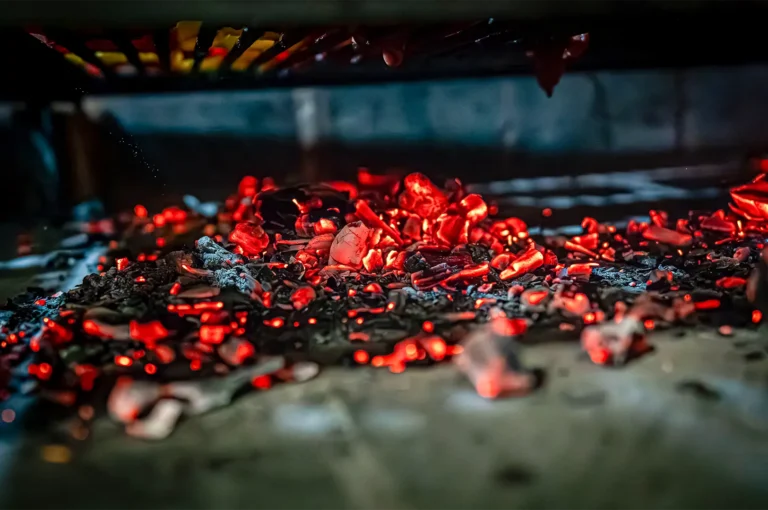

炭の灯 carries a quiet warmth that feels almost alive. It does not flicker dramatically, but glows with steady intention, shaping everything placed above it. If you sit close enough, you begin to feel its presence before you fully understand it.
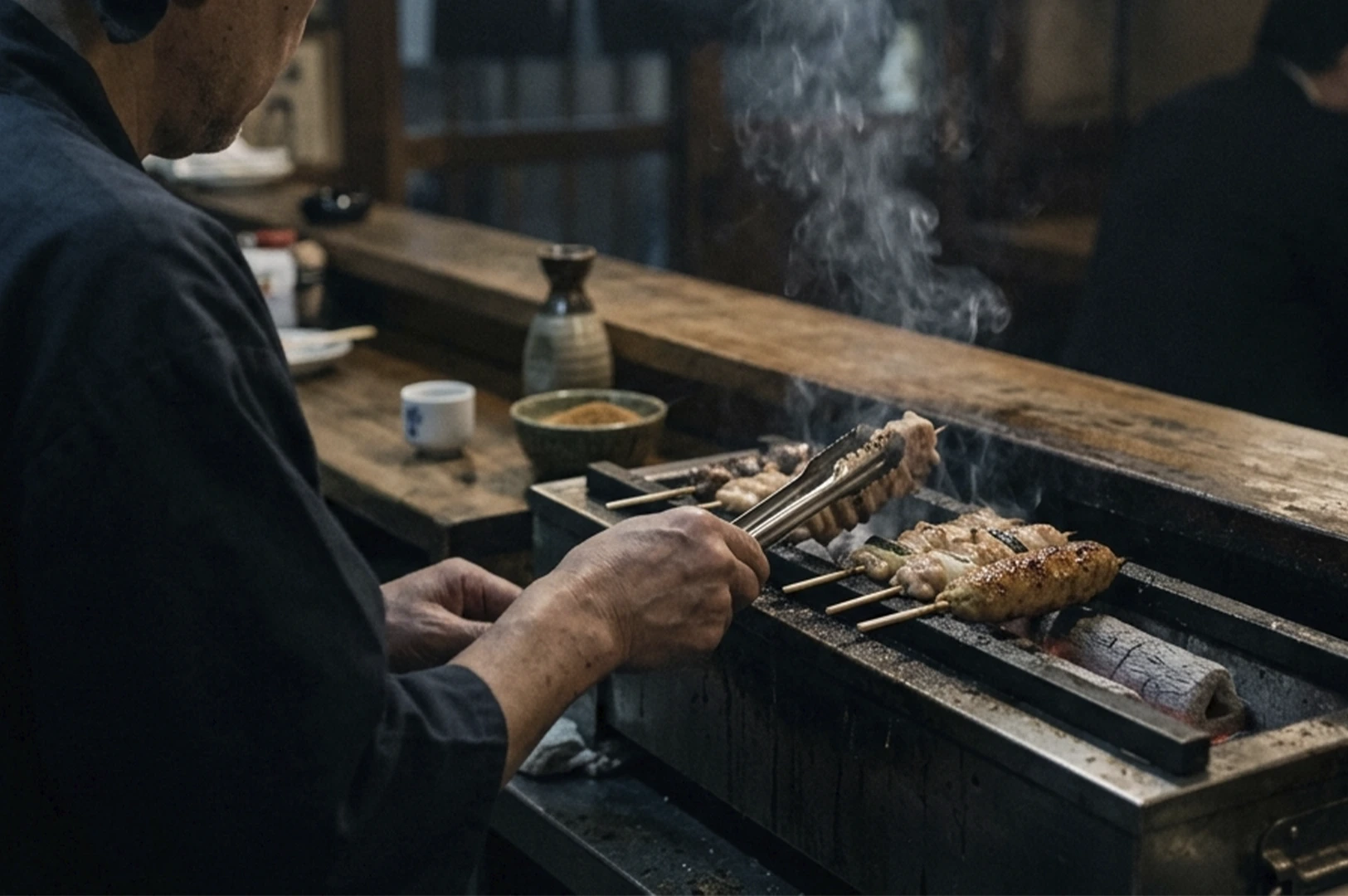
There is comfort in watching the grill. The gentle crackle, the soft brushing of tare, the way the chef leans in just slightly to observe. These are not grand actions, but they hold care within them.
Each cut responds differently to the heat. Thigh becomes tender and full, skin turns crisp and delicate, while liver requires careful attention to remain smooth. You do not need to know the technique to feel the difference. It reveals itself in each bite.
When a skewer is placed before you, take a moment. Notice the warmth, the aroma, the slight sheen from the charcoal. These details are small, but they guide your experience.
Over time, the glow of binchotan becomes more than just heat. It becomes a quiet connection between the chef, the fire, and you.
And in that space, every skewer carries a story shaped gently by flame.