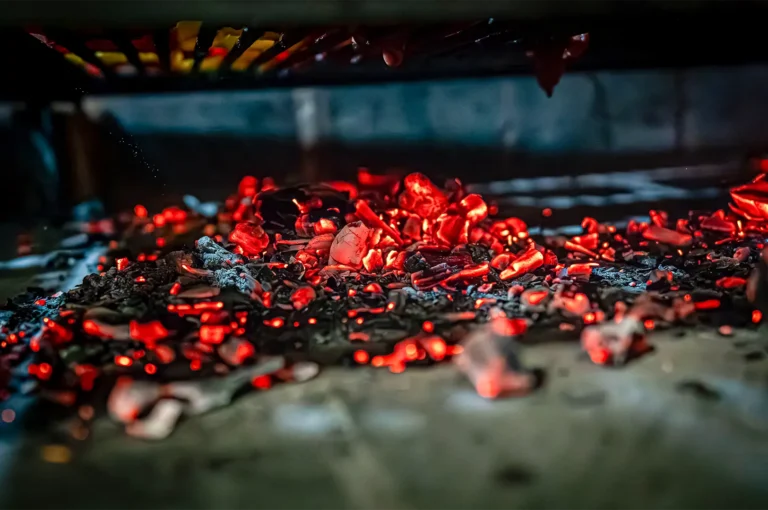

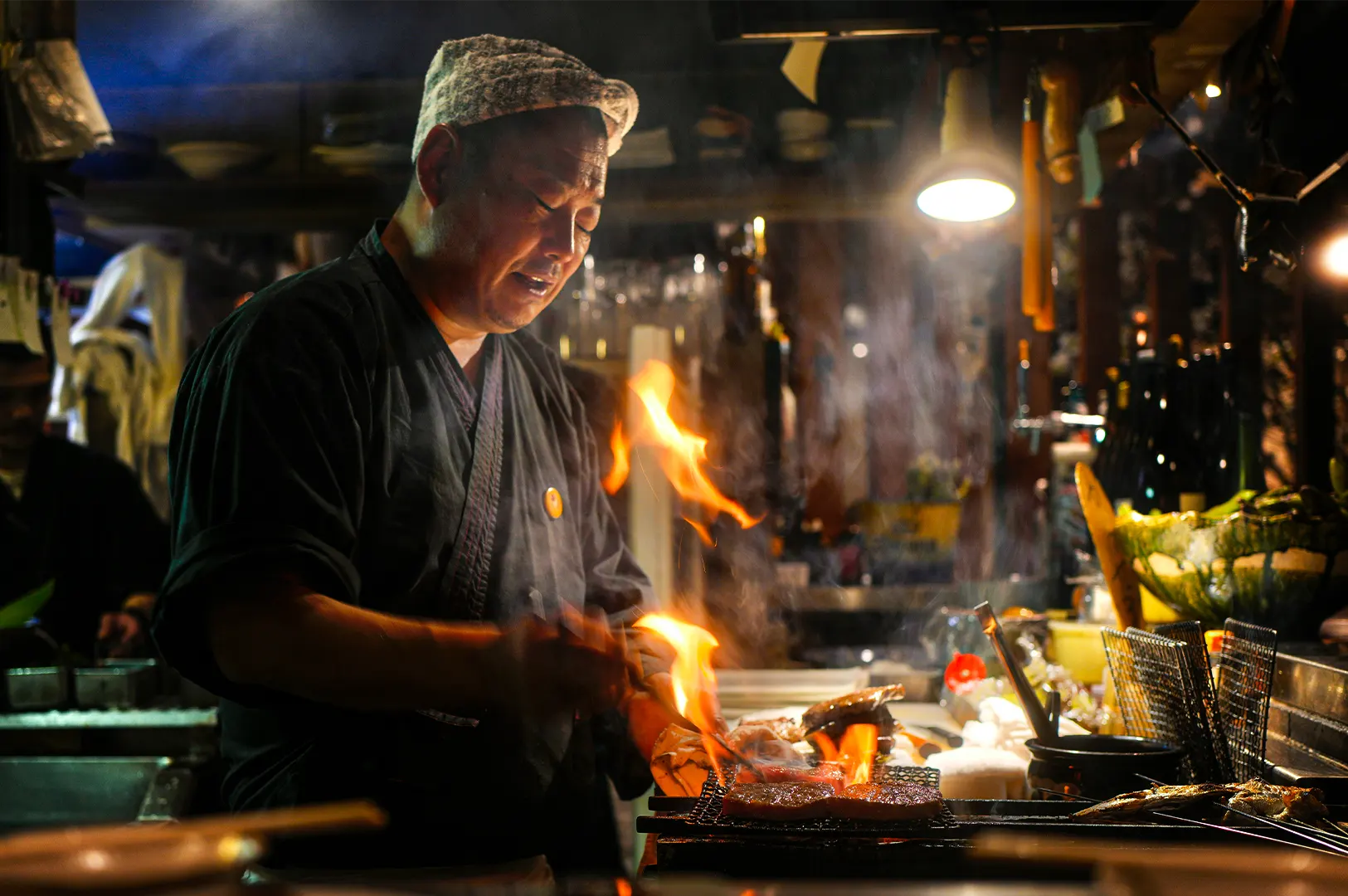
焼き場の所作 defines the atmosphere of a yakitori counter. The experience is not limited to eating. Observation forms part of the dining structure.
The chef’s movements are controlled and repetitive. Skewers are rotated at measured intervals, positioned across different heat zones, and adjusted continuously based on rendering and surface colour. These actions appear subtle but reflect accumulated technical experience.
Counter seating allows diners direct visibility of this process. Unlike enclosed kitchens, yakitori preparation remains exposed. This transparency supports trust and reinforces the connection between preparation and service.
There is little unnecessary movement at the grill. Tools remain within immediate reach. Saucing, seasoning, and plating are completed with minimal interruption. Efficiency reduces delays between cooking and serving, preserving texture and temperature consistency.
Conversation at the counter is typically restrained. This allows attention to remain on timing and sequencing. Loud interaction disrupts both concentration and pacing.
Visual cues also help diners assess quality. Excessive flare-ups, unattended skewers, or inconsistent turning indicate weaker heat management. Controlled movement and stable pacing suggest technical discipline.
The yakitori counter functions as a form of quiet theatre, but without performance. The chef does not seek attention directly. Instead, confidence is communicated through consistency, precision, and restraint.
For many diners, observing this process becomes inseparable from the meal itself.