
締めの流れ determines how a yakitori meal concludes. The ending is structured, not abrupt, and follows a gradual reduction in intensity.
Final skewers are typically lighter or more balanced. Rich, fatty cuts are rarely served at the end. This allows the palate to settle rather than become overwhelmed.
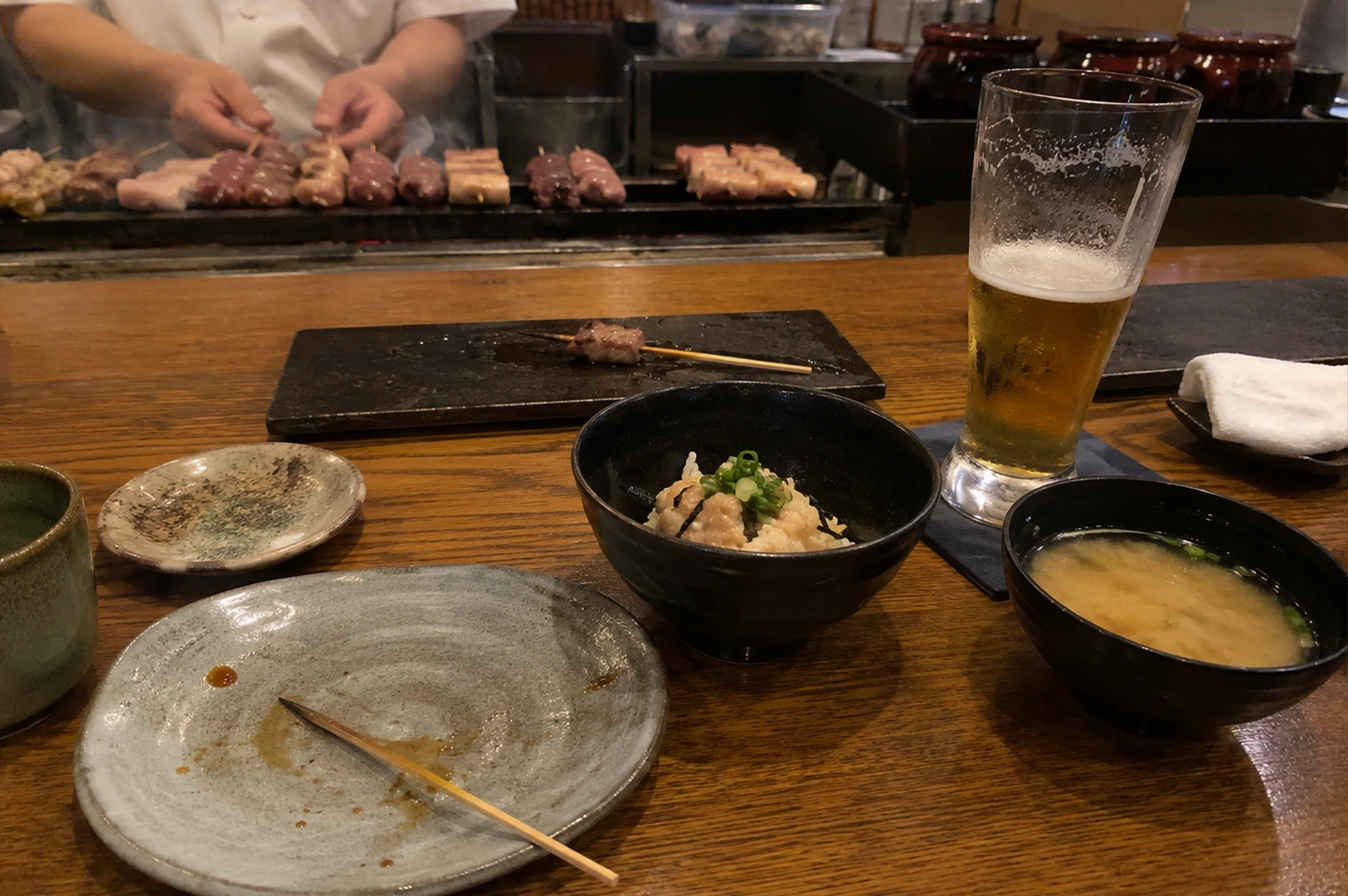
Carbohydrate elements such as rice, onigiri, or simple noodles may be introduced. These provide closure and help neutralise residual flavours.
Timing remains consistent. The final sequence is spaced slightly further apart, signalling the transition toward completion.
Dessert is minimal or absent in traditional yakitori settings. If present, it is simple and not intended to dominate the experience.
The chef may also reduce interaction, focusing on completing the final sequence efficiently. This maintains continuity and avoids unnecessary extension of the meal.
For diners, recognising the end is part of the experience. Ordering additional skewers beyond this point disrupts the intended structure.
A complete yakitori meal is defined by balance from start to finish. The conclusion is designed to leave clarity rather than excess.