
Category Charcoal Chronicles

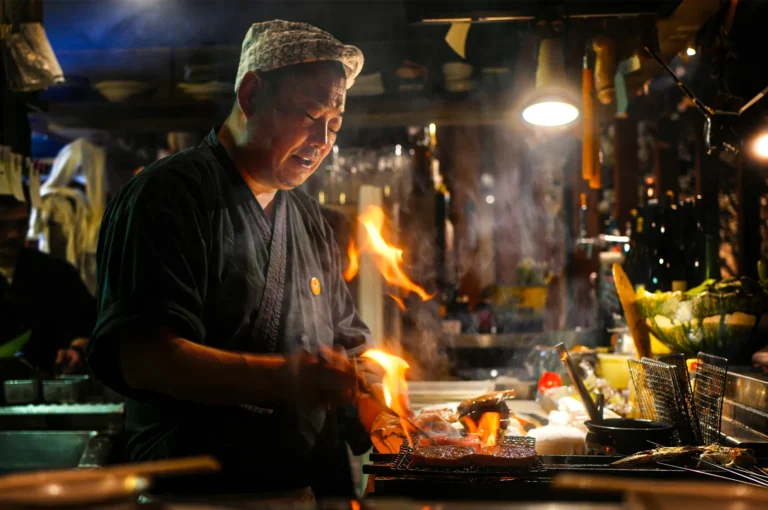
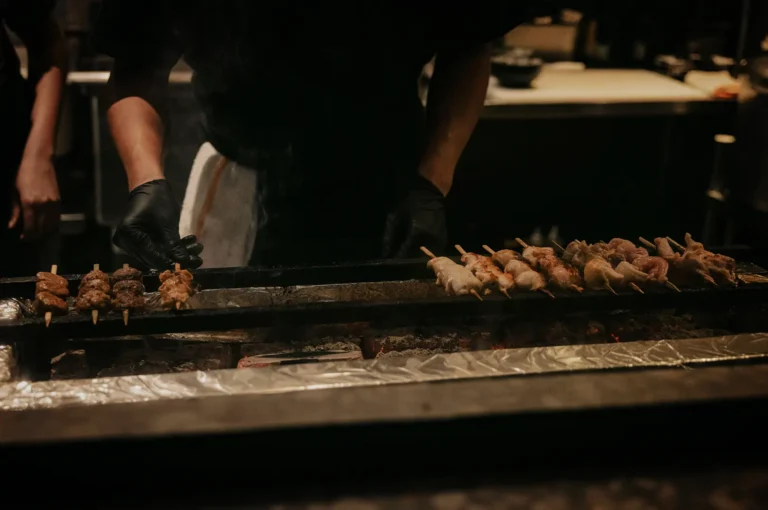
Chef in a dark uniform grilling food over open flames in a dimly lit kitchen, with smoke and warm lighting creating a dramatic culinary atmosphere.

Watching the Chef: The Quiet Theatre of the Yakitori Counter

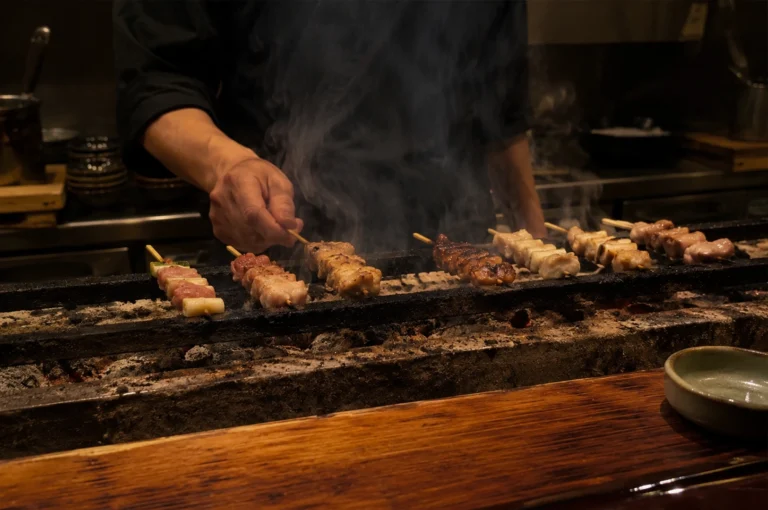
焼き場の所作 defines the atmosphere of a yakitori counter. The experience is not limited to eating. Observation forms part of the dining structure. The chef’s movements are controlled and repetitive. Skewers are rotated at measured intervals, positioned across different heat zones,…

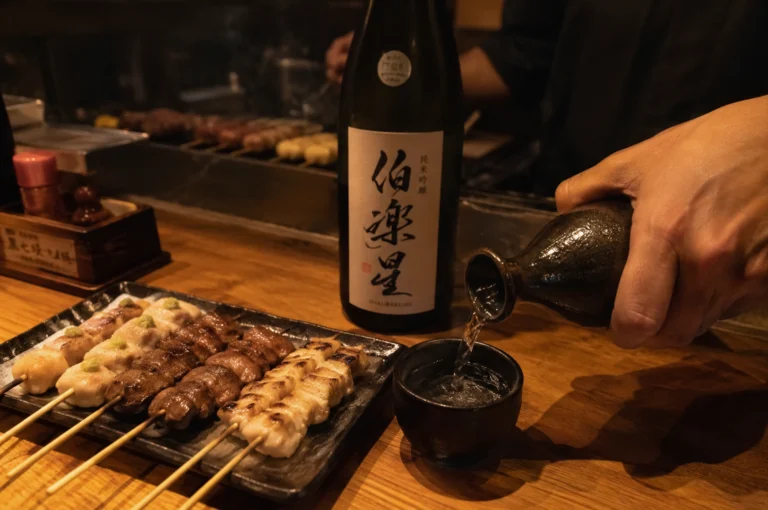
A close-up, warm-toned photograph captures a traditional Japanese dining experience at a wooden counter, highlighting the pairing of yakitori and sake. On the left, a black rectangular plate holds several skewers of grilled chicken, arranged neatly by type: some are topped with a dab of green wasabi, others feature dark, glossy glazed meat, and the rest show a lightly charred, pale surface. To the right, a hand is pouring sake from a dark, textured ceramic flask into a small matching cup, creating ripples in the clear liquid. Standing prominently behind the cup is a large, dark green sake bottle with a white label featuring elegant black Japanese calligraphy that reads "Hakurakusei" (伯楽星). In the dimly lit, soft-focus background, additional skewers can be seen cooking over a grill, alongside small condiment containers on the left side of the counter.

The Art of Pairing: Yakitori and Sake Harmony

酒の響き, or “the harmony of sake,” plays a subtle but important role in yakitori dining. Many diners focus on the meat, the grilling technique, or the seasoning, but sake, when paired correctly, elevates the entire experience. The first step in…

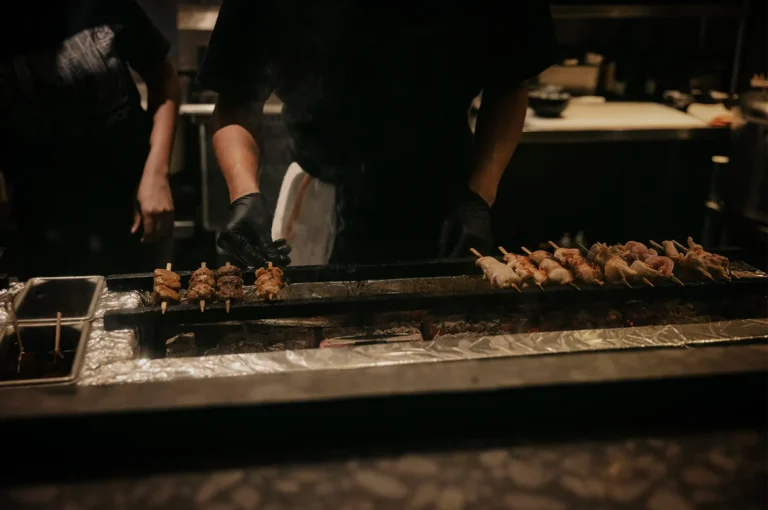
A chef in a dark uniform meticulously tends to a row of yakitori skewers grilling over a traditional narrow charcoal bed, known as a konro. Thick plumes of white smoke rise from the sizzling meat, partially obscuring the chef’s torso and adding a sense of movement to the dimly lit, atmospheric kitchen. The skewers feature various cuts of chicken and green scallions, some showing a deep, caramelized char while others are still pale and cooking. In the foreground, the edge of a polished wooden counter and a small ceramic dish are visible, while the background reveals the organized clutter of a professional Japanese kitchen with stacked bowls and stainless steel surfaces.

The Sound of the Grill: Listening to Yakitori

音の気配 is something you may not notice right away. The soft crackle of fat meeting charcoal, the faint hiss as a skewer is turned. These sounds are quiet, but they tell a story. If you sit close enough, the grill…

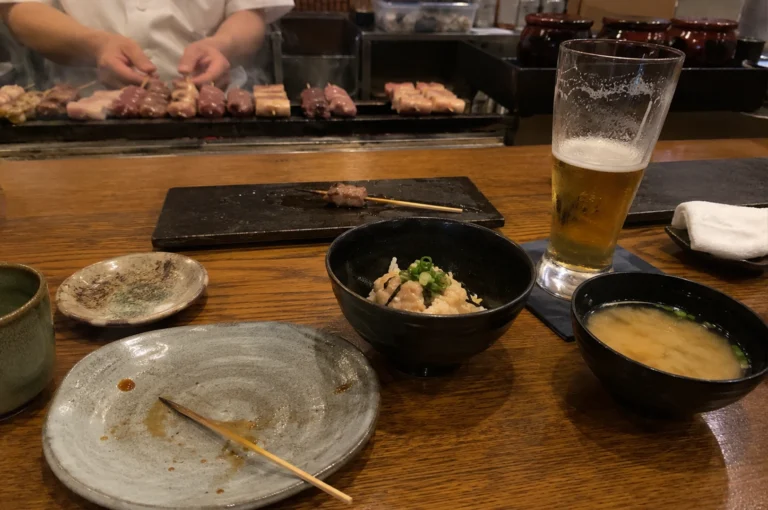
A high-angle, eye-level shot captures a person's perspective at a wooden yakitori counter, signifying the end of a meal. In the foreground, a large, empty gray ceramic plate sits with a single used wooden skewer and sauce residue, flanked by a small bowl of miso soup and a bowl of rice topped with minced meat and scallions. A tall, half-empty glass of light amber beer sits on a blue coaster to the right. In the mid-ground, a black rectangular serving slate holds one final lonely skewer. The background, slightly out of focus, shows a chef’s hands expertly tending to several rows of chicken skewers grilling over a smoky charcoal hearth, while dark ceramic jars and kitchen containers line the back shelf. The warm, ambient lighting and the scattered remains of the meal create an intimate, satisfied atmosphere of a traditional Japanese dining experience.

Ending the Meal: Knowing When Yakitori Is Complete

締めの流れ determines how a yakitori meal concludes. The ending is structured, not abrupt, and follows a gradual reduction in intensity. Final skewers are typically lighter or more balanced. Rich, fatty cuts are rarely served at the end. This allows the…

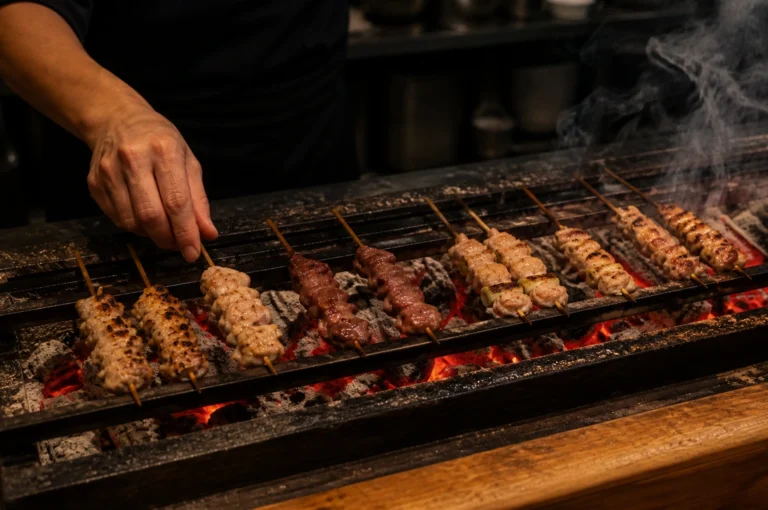
In a dimly lit kitchen with a documentary aesthetic, a chef's hand reaches out to adjust several yakitori skewers grilling over a bed of glowing red charcoal. The close-up shot captures the realistic textures of the various chicken cuts and leeks as they char and glisten under the heat, with thin wisps of smoke rising from the traditional grill. The focus is sharp on the foreground skewers, showcasing the meticulous preparation typical of a professional Japanese culinary environment, while the background remains softly blurred to emphasize the action at the station.

Heat Zones and Precision: How Chefs Control the Grill

火の配置 defines how yakitori is cooked. The grill is not uniform. It is divided into heat zones that allow the chef to manage different cuts simultaneously. Closer sections of the grill produce higher heat, used for crisping skin or finishing…