
There are evenings when Singapore seems determined to hold our attention.
The buildings glow against the darkening sky. Reflections move across the water. Trains pass, phones light up, and crowds gather beneath towers of glass and steel.
Around Marina Bay, the city rarely feels still.
Perhaps this is why sitting near a charcoal grill can feel so grounding.
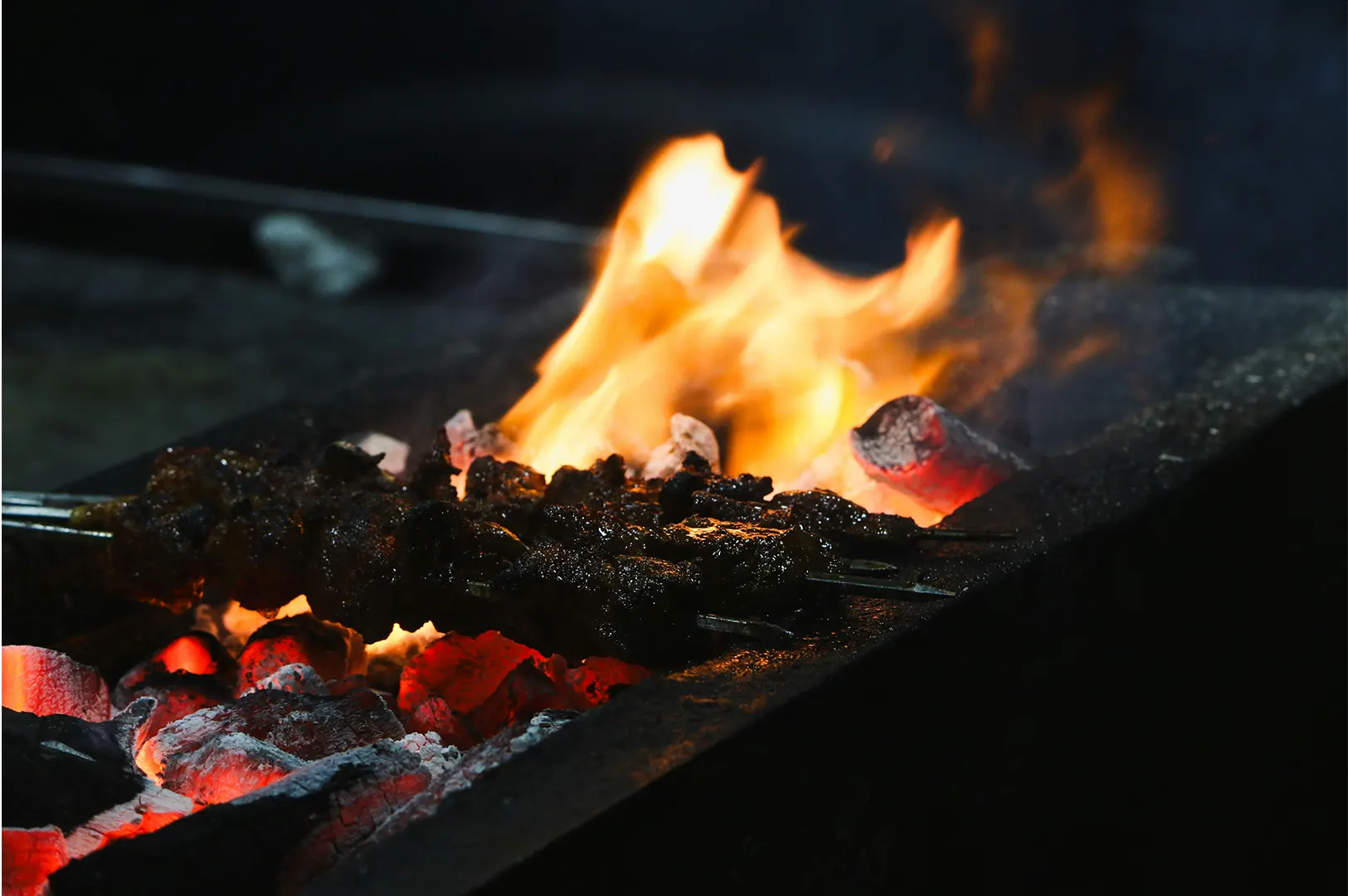
A yakitori counter creates a smaller world inside the larger one. The skyline may remain visible beyond the windows, but the eyes slowly return to what is closer: the chef’s hands, the turning of a skewer, and the faint orange light beneath the grill.
The city stays outside.
The charcoal settles between us.
There is something intimate about watching food prepared over fire. The movements are careful but familiar. A skewer is placed over the heat, lifted, turned, and returned. Fat falls onto the charcoal. Smoke rises briefly before disappearing into the room.
Nothing about the process asks for spectacle.
This feels especially clear in a place known for grand views. A Marina Bay Sands skyline dining experience (https://tomintransit.mystrikingly.com/blog/marina-bay-sands-singapore-skyline-food-experience) can make dinner feel larger than an ordinary evening. The height, architecture, water, and lights become part of the meal before the first plate arrives.
Yet the most memorable moments may still happen at the smallest scale.
They happen when the skin on a piece of chicken begins to tighten over the heat. When tare catches the light as it settles into a glossy layer. When a warm skewer is placed before two diners who have finally stopped checking their phones.
The view may bring people into the room.
The fire brings them back to one another.
At a yakitori counter, there is little distance between preparation and eating. The chef works only a few steps away. Each skewer arrives when it is ready, asking for attention before the next one appears.
This gradual pacing changes conversation.
There is time to speak, but also time to pause. Silence does not need to be filled immediately. The crackle of charcoal and the quiet activity behind the counter give the evening its own rhythm.
For couples, this can feel gently private. For friends, it creates space for conversation to unfold without urgency. For colleagues arriving after work, the counter offers a place where professional roles can slowly loosen over chicken thigh, tsukune, and cold drinks.
The city continues beyond the glass.
Messages are still arriving somewhere. Cars move through the streets below. Tables turn, plans change, and another evening gathers speed.
But near the grill, attention becomes narrower.
The next skewer matters. So does the person beside you. So does the small decision between shio and tare, or whether to order one more before leaving.
Good yakitori has always depended on restraint. The seasoning should support the cut rather than hide it. The smoke should remain gentle. The chef must know when to turn the skewer and, just as importantly, when to leave it alone.
Perhaps connection requires a similar kind of care.
It does not always need an occasion or a dramatic setting. Sometimes, it begins with two seats, a patient fire, and enough time to notice who is sitting across from us.
Outside, Singapore shines at its brightest.
Inside, the charcoal offers another kind of light.