

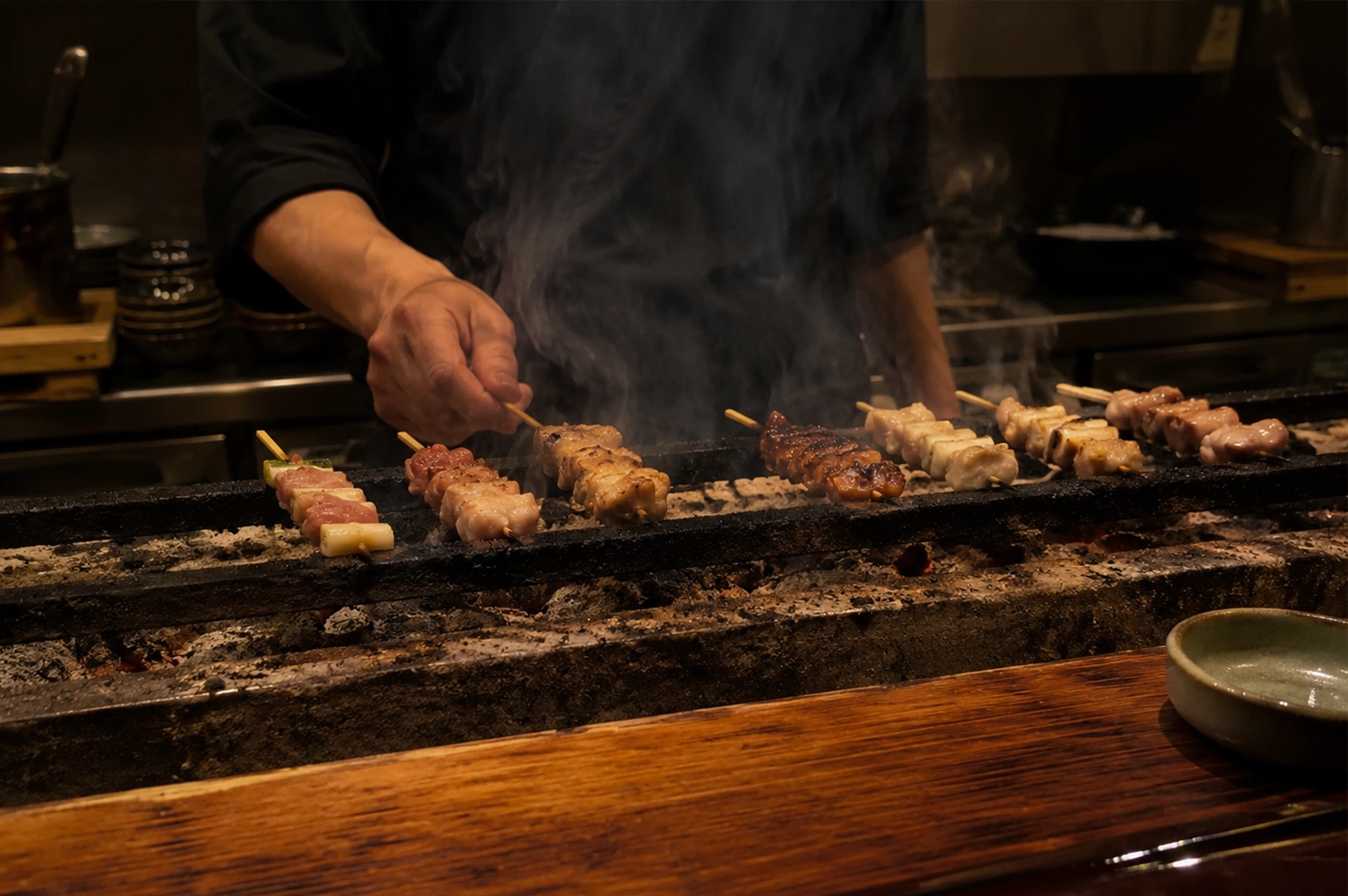
音の気配 is something you may not notice right away. The soft crackle of fat meeting charcoal, the faint hiss as a skewer is turned. These sounds are quiet, but they tell a story.
If you sit close enough, the grill speaks in small signals. A gentle sizzle means the fat is rendering slowly. A sharper sound may mean the heat is stronger, the surface beginning to crisp.
You do not need to understand every detail. Just listen. Over time, the sounds begin to feel familiar, almost comforting. They create a rhythm that carries through the entire meal.
There is something grounding about it. No loud music, no overwhelming noise. Just the steady presence of the grill working quietly in front of you. Even the pauses have their own sound. A moment of stillness before the next skewer is placed. A subtle shift as the chef adjusts position.
When your skewer arrives, it carries that sound with it, even if only in memory. You taste not just the flavour, but the process behind it.
Yakitori is often described through taste and texture. But if you listen closely, you will find that sound is just as much a part of the experience.
And once you notice it, it stays with you.