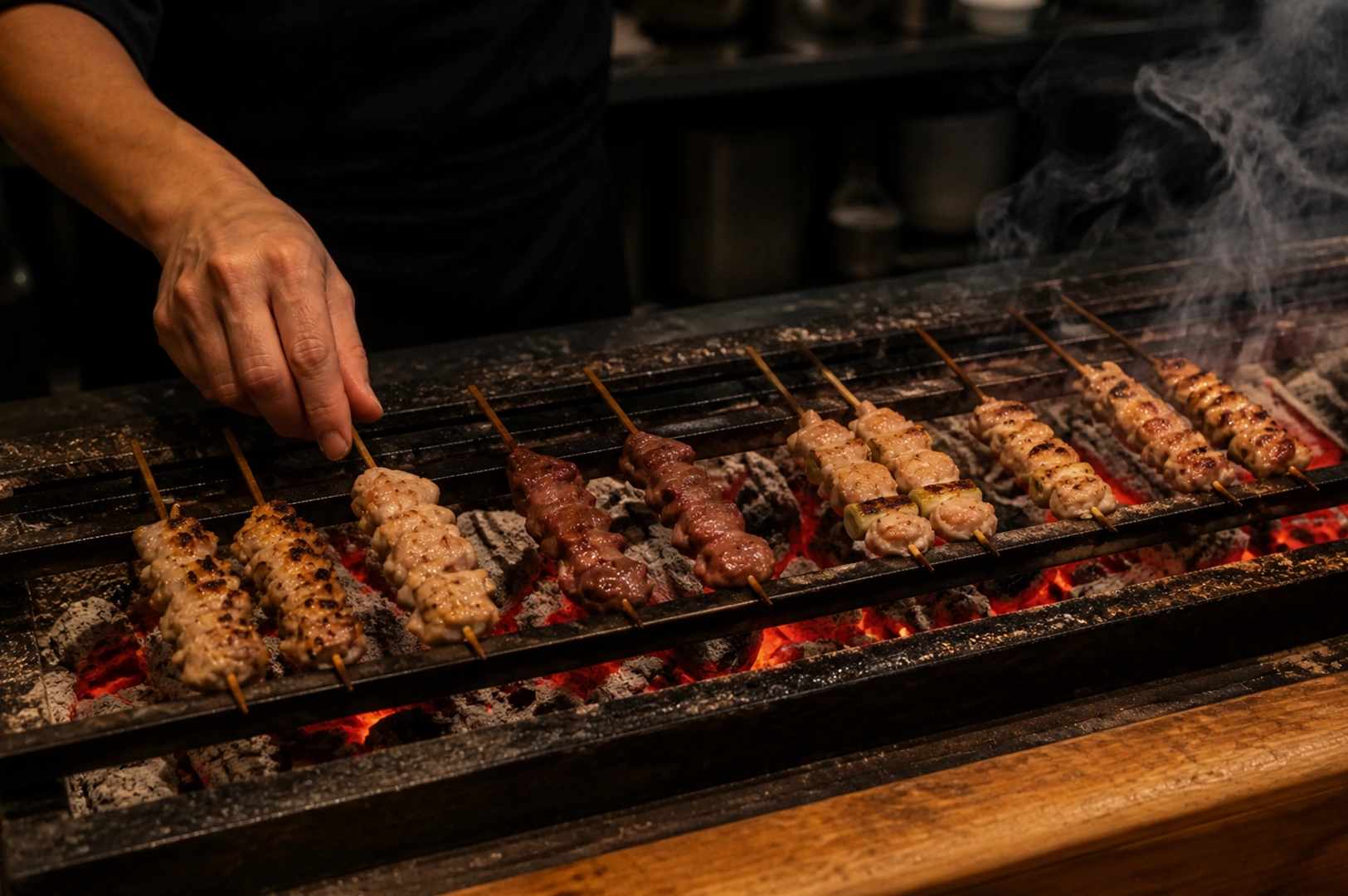
火の配置 defines how yakitori is cooked. The grill is not uniform. It is divided into heat zones that allow the chef to manage different cuts simultaneously.
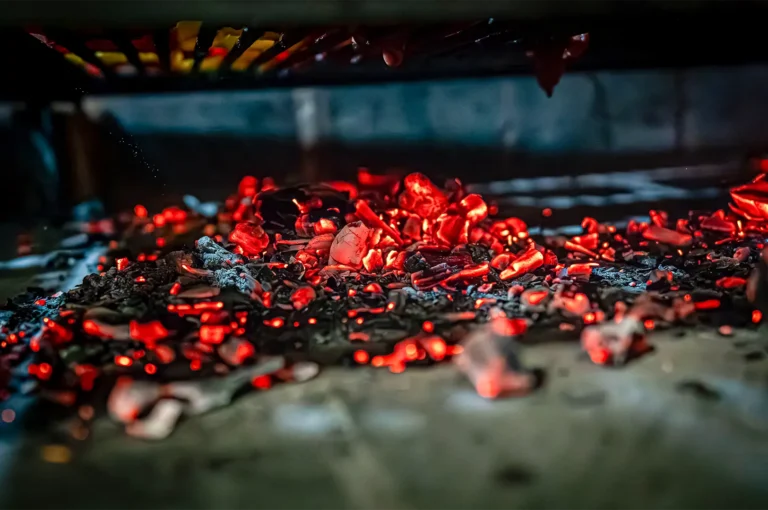
Closer sections of the grill produce higher heat, used for crisping skin or finishing surface caramelisation. Slightly elevated or distant zones provide moderate heat, suitable for thicker cuts that require gradual cooking.
Skewers are moved continuously between these zones. This is not random. It allows the chef to control rendering, moisture retention, and external texture with precision.
Different cuts require different handling. Chicken skin is exposed to higher heat to achieve crispness. Liver is cooked more gently to maintain a smooth interior. Thigh is often rotated between zones to balance char and tenderness.
The timing of movement is critical. Leaving a skewer in one position for too long results in uneven cooking. Frequent adjustments ensure consistency across each piece.
Observation of heat zones also provides insight for diners. It indicates whether the chef is actively managing the grill or relying on static placement. Active movement is a key indicator of controlled cooking.
Yakitori grilling is not defined by flame intensity alone. It is defined by how heat is distributed and managed across the grill surface.