
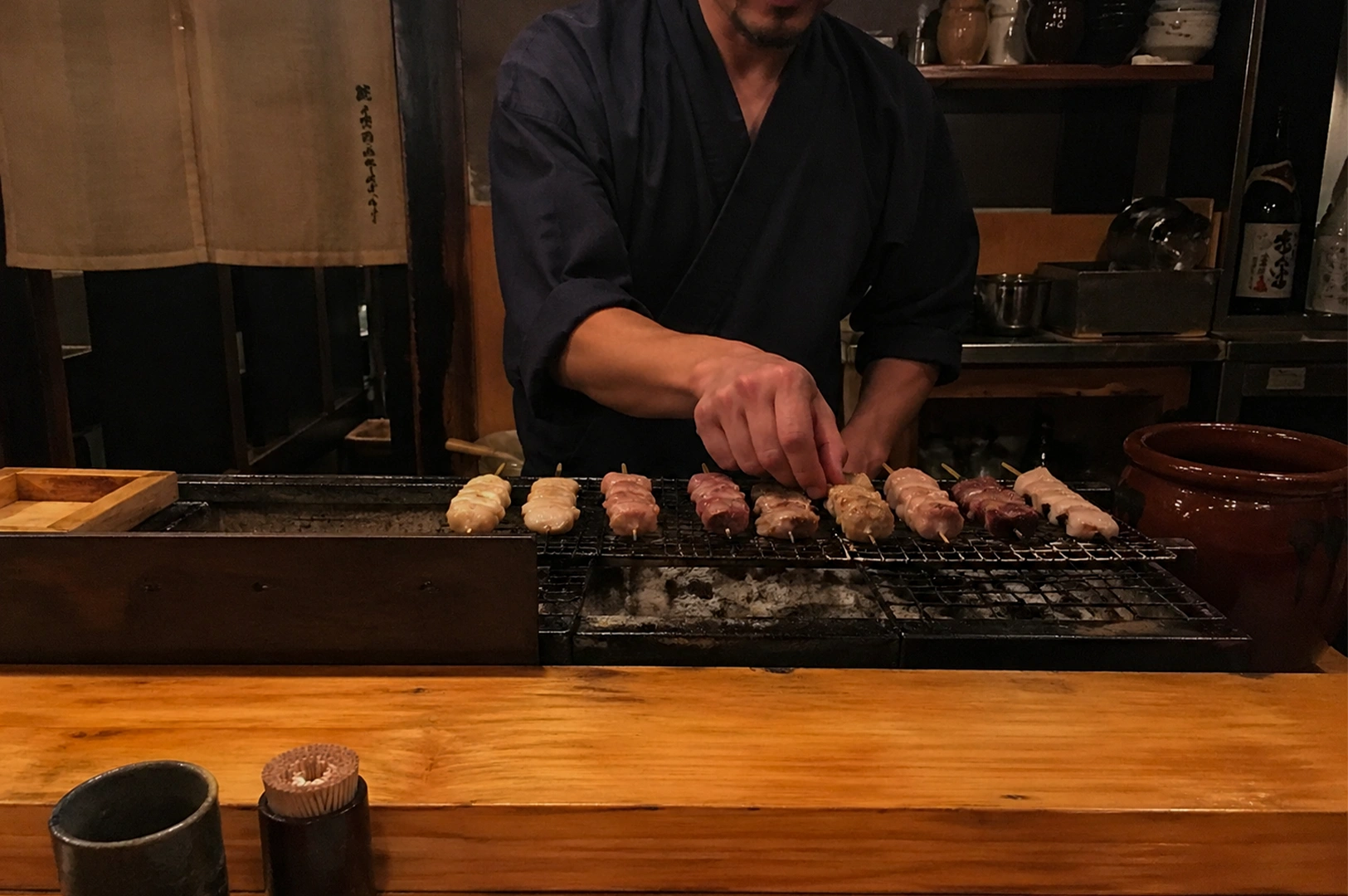
串選び, “the art of skewer selection,” is where yakitori begins. While diners may think that choosing what to grill is a simple matter of preference, the reality is much more intricate. Chefs carefully select each cut to create a balanced and varied experience for their guests.
The first step in selection is understanding the meat. Different cuts of chicken offer distinct textures and flavours. Thigh, for instance, is rich and tender, while breast is leaner, with a subtle flavour that can be enhanced by salt or tare. Skin, often considered a delicacy, is grilled until crispy, its fat rendering perfectly over the hot charcoal.
But it’s not just the cuts that matter. The order in which they are served is just as important. Lighter cuts like chicken breast or vegetables are typically served first, while the richer cuts like thigh and liver come later, allowing the diner’s palate to build toward deeper, more complex flavours.
For the chef, choosing what to grill is a balancing act. They must consider not just the variety of cuts, but also the timing of when to serve each one, ensuring that the flavours and textures evolve naturally throughout the meal.
Skewer selection is an art form, and its success lies in understanding the balance between meat, heat, and timing.