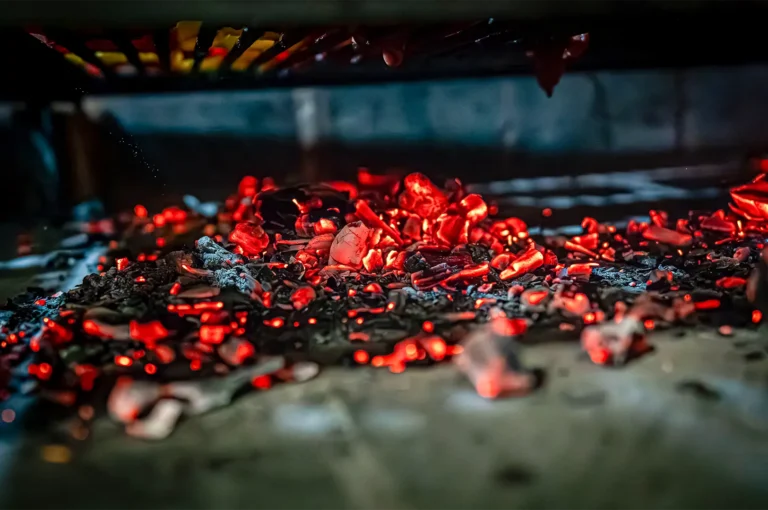

火と間 is where yakitori is defined. The fire remains constant, but its intensity is controlled through distance, timing, and restraint. Patience is not conceptual here. It is built into the process.
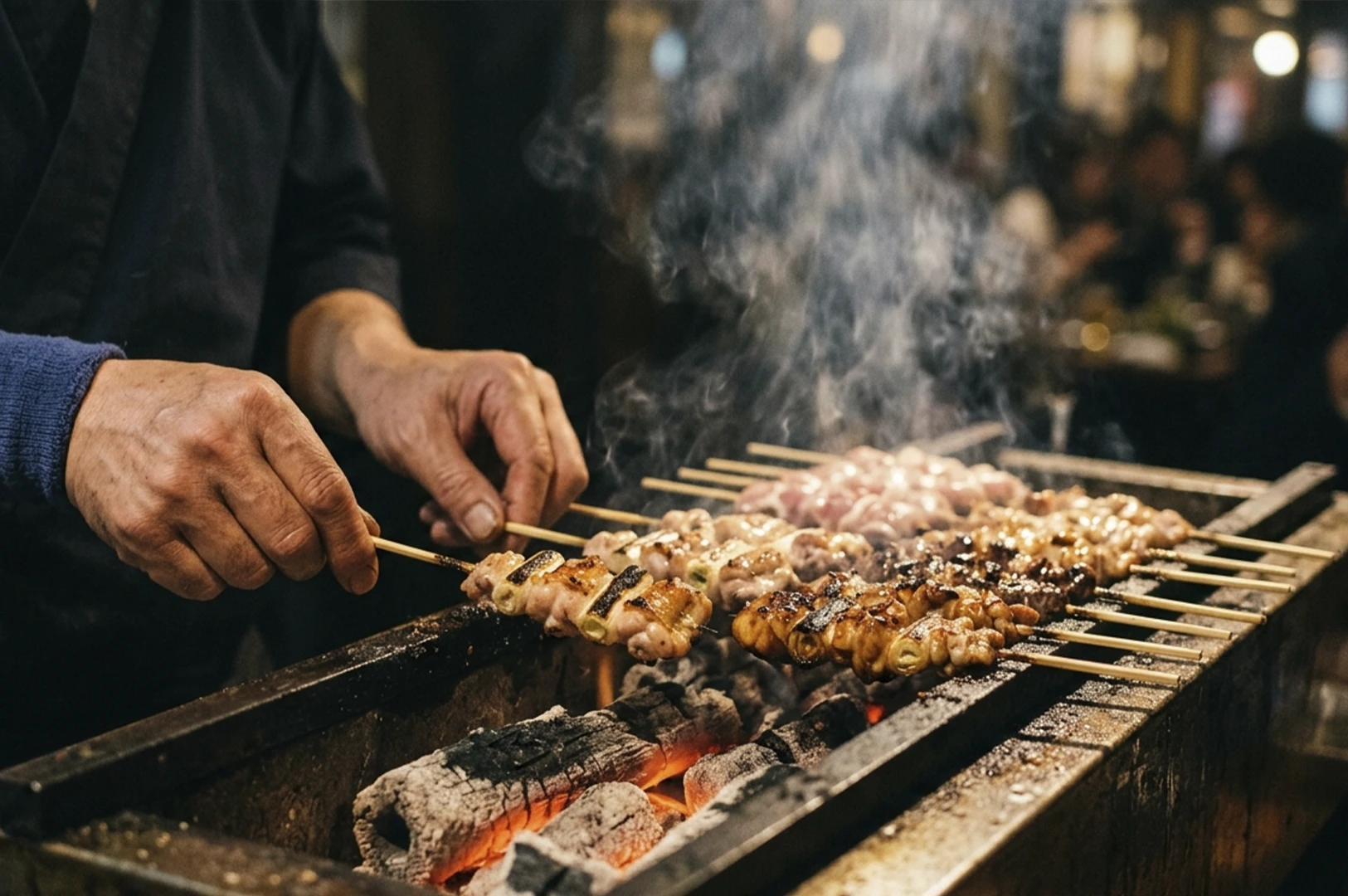
Binchotan produces steady heat, allowing for consistent cooking without sudden flare. Skewers are turned with intention. Each movement is timed to manage fat rendering and surface caramelisation while preserving internal moisture.
Silence at the grill reflects concentration. The chef monitors multiple skewers simultaneously, adjusting placement and rotation as needed. Reduced distraction supports precision.
For diners, patience appears in timing and response. Skewers are served in sequence, not all at once. This structure maintains quality. Each piece should be consumed shortly after it is served to preserve texture and temperature.
Menu progression also reflects patience. Lighter cuts are served first, followed by richer ones. This prevents flavour fatigue and maintains balance throughout the meal.Yakitori demonstrates that results depend on control over time. The chef manages fire and sequence. The diner manages attention and timing. Both contribute to the outcome