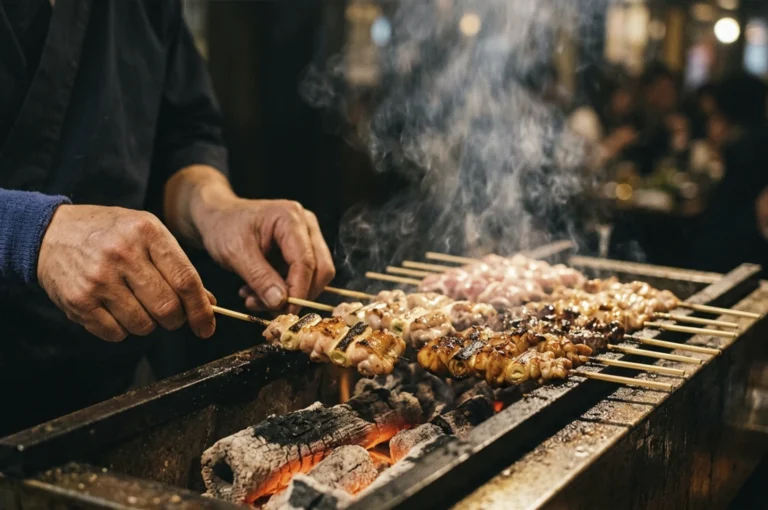

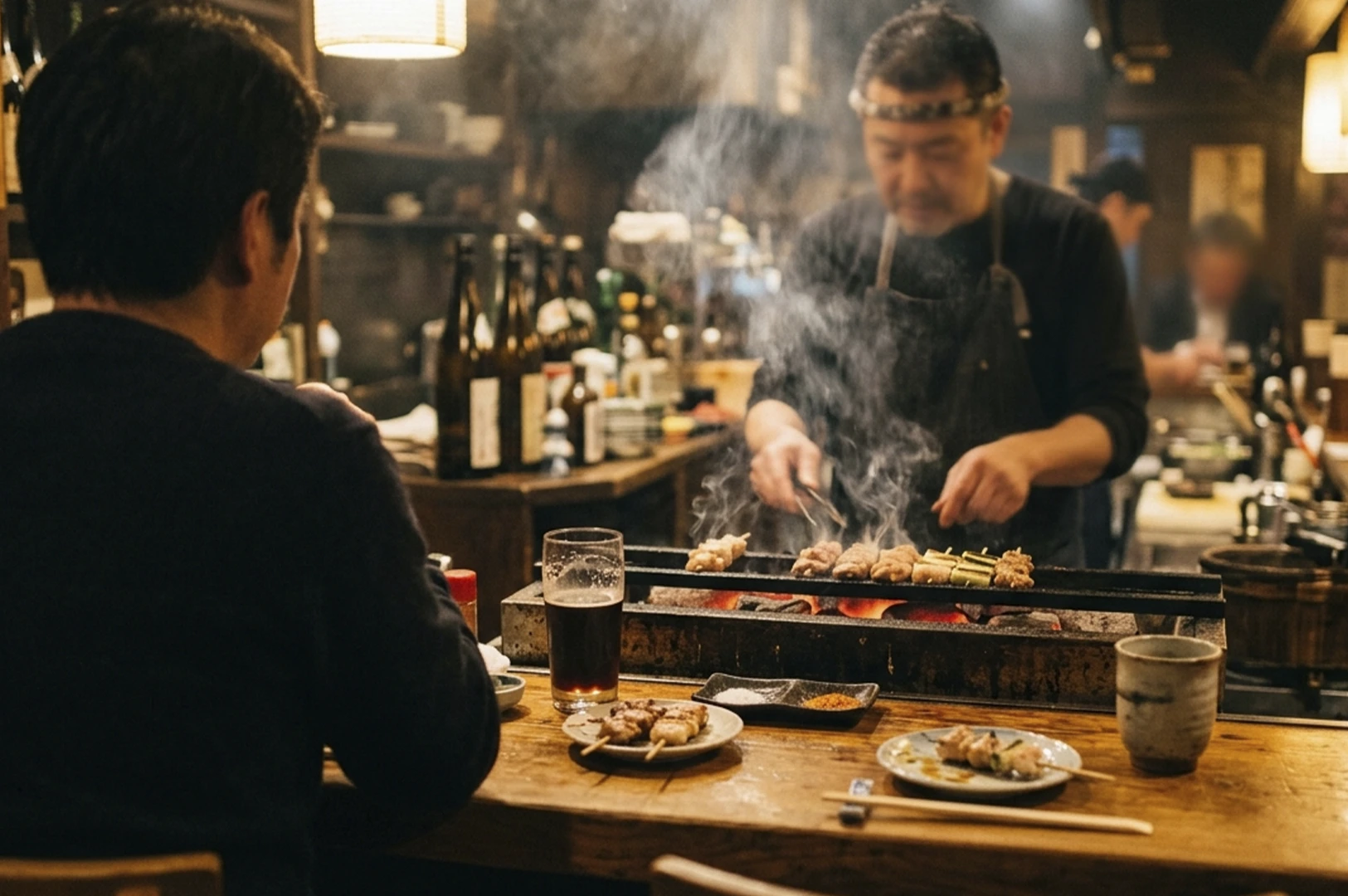
煙の余韻 rests softly in the air before the first skewer arrives. The smoke does not rush. It settles, almost like a quiet welcome, wrapping the counter in warmth. If you sit long enough, you begin to notice how everything unfolds gently. The chef reaches, turns, pauses. No movement feels wasted, and nothing is hurried.
A yakitori night is shaped by small, unspoken rituals. You may see a diner lift a skewer the moment it is placed down, not out of impatience, but out of understanding. Each piece is meant to be enjoyed at its peak. Let it rest too long, and something delicate fades.
There is also a rhythm to ordering. It is rarely about choosing everything at once. Instead, it flows. A few skewers begin the evening, often lighter cuts, before moving into deeper flavours. You follow the chef’s pace, sometimes without realising it.
If this is your first time, simply observe. Notice how others eat, how they pause, how they take small sips between bites. Yakitori does not ask for attention. It invites you into stillness.By the end of the evening, the smoke lingers faintly on your clothes, like a quiet reminder of where you have been.