

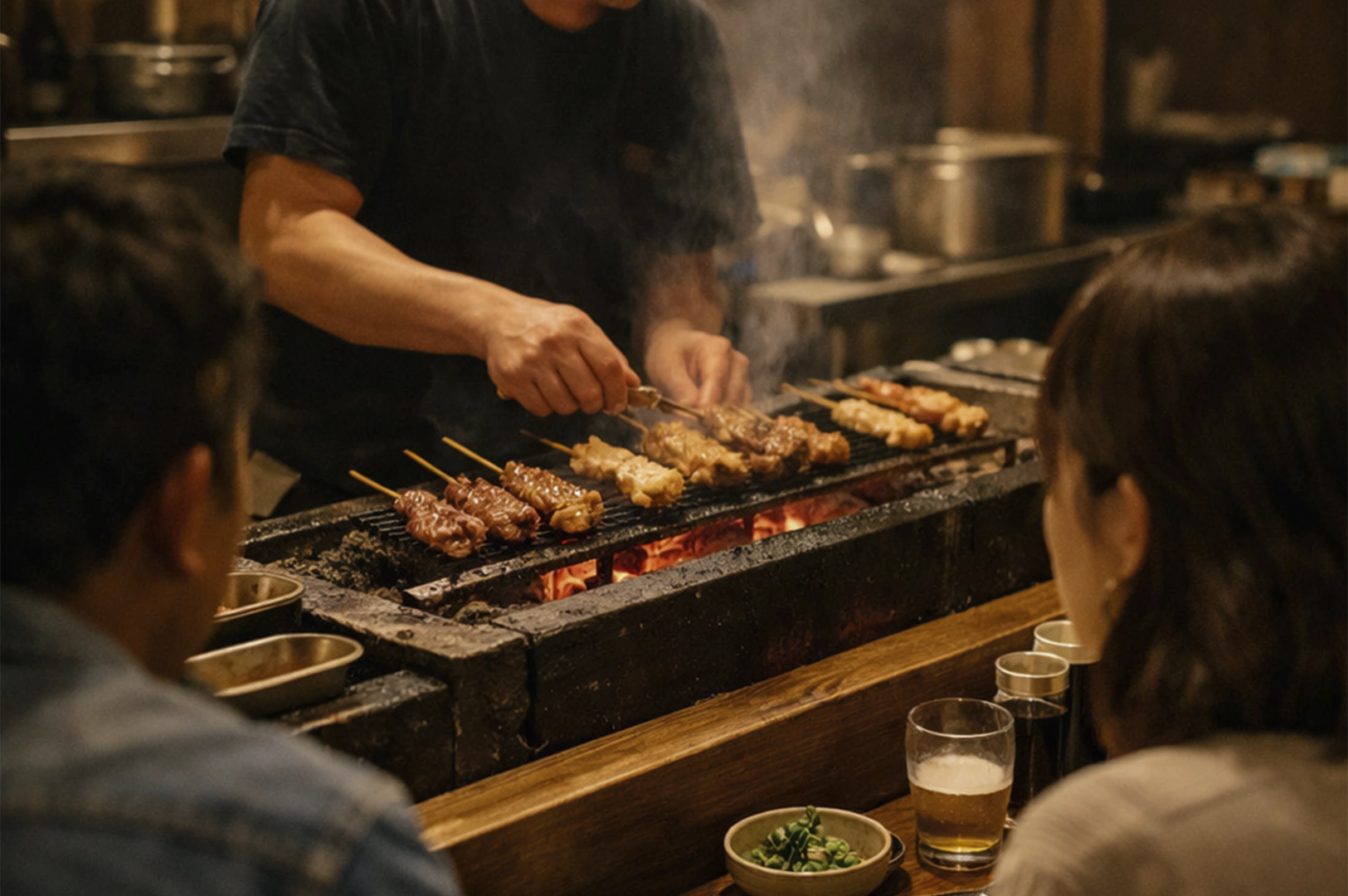
焼き場の前 is the most functional seating position in a yakitori establishment. It provides direct visibility of the grill, allowing diners to observe preparation, timing, and sequencing.
Seating at the counter is not only about proximity. It enables a clearer understanding of how skewers are managed. Diners can observe heat zones, rotation patterns, and the order in which cuts are prepared.
This visibility supports decision-making. Observing previous skewers helps diners anticipate portion size, cooking style, and pacing. It also allows for more precise ordering adjustments during the meal.
Lighting plays a functional role. Lower lighting reduces visual distraction, directing attention toward the grill. The glow from binchotan provides sufficient illumination for both preparation and presentation.
Interaction at the counter remains minimal but purposeful. Short exchanges between chef and diner are typically limited to ordering or clarification. This maintains efficiency and focus.
From a structural perspective, the counter is designed for continuity. It aligns preparation, service, and consumption within a single visual field.This arrangement defines the yakitori experience. It is not only about the food, but about access to the process that produces it.