
The landscape of Japanese dining in Singapore offers a vast spectrum of options, ranging from casual neighborhood izakayas to highly specialized dining concepts. A notable addition to the Tanjong Pagar enclave is Torikami. Unlike a standard yakitori restaurant, this space focuses exclusively on a structured tasting menu.
The objective of this review is to evaluate the pacing, technique, and overall execution of their dining format. I visited the location recently to observe how the chef and staff manage the flow of a course-by-course service. Readers curious about the establishment will find a detailed breakdown of the meal, the grilling techniques employed, and practical advice for securing reservations.
The Concept of Yakitori Omakase
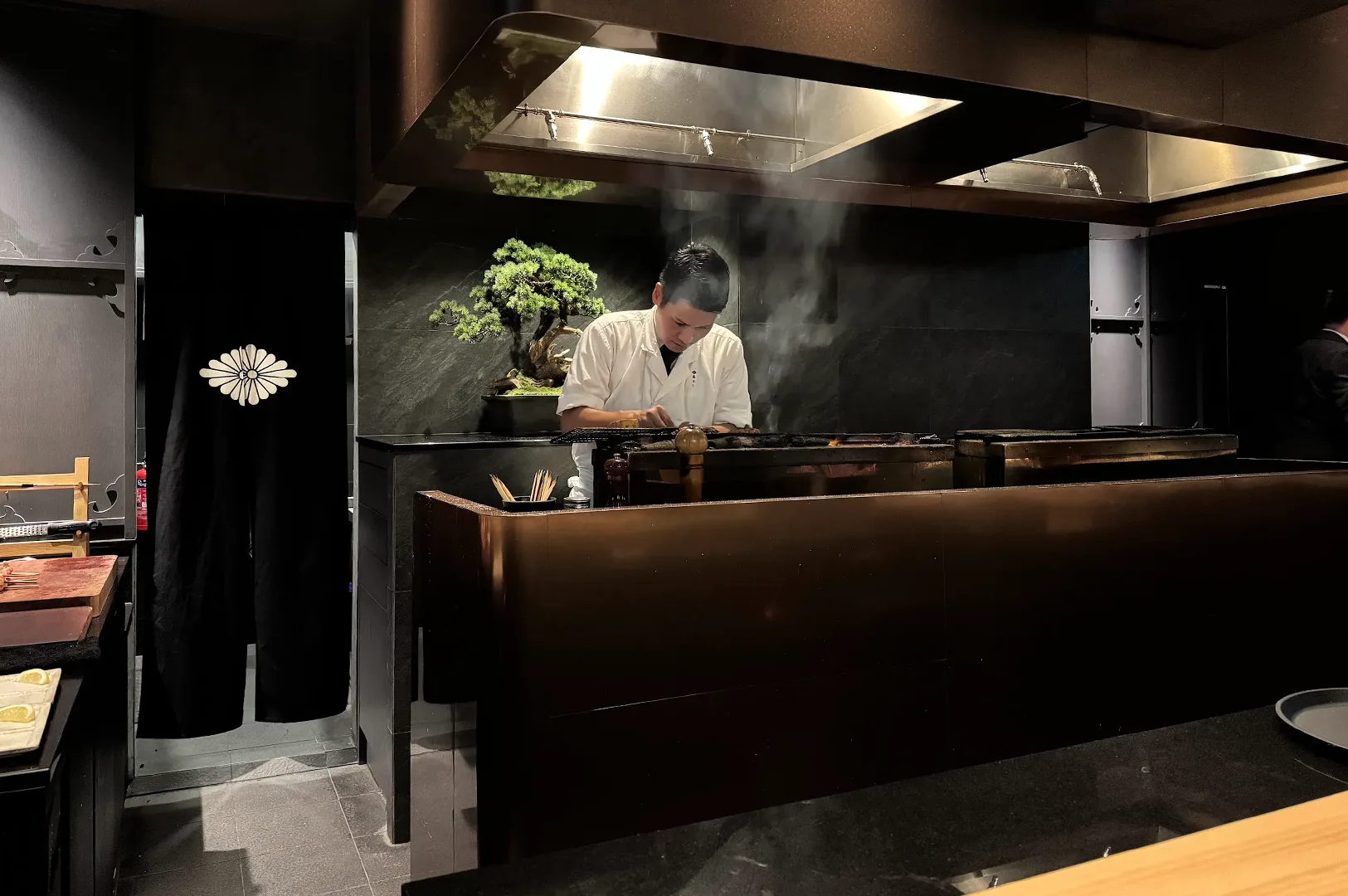
Upon entering the Torikami, my eyes adjusted to a trendy black room designed to minimize distractions. The layout relies heavily on counter seating, placing diners directly in front of the grill. This structural choice ensures that the focus remains on the fire, the timing, and the chef’s movements.
The concept here is yakitori omakase, a chef-led progression of skewers and small plates. The team, helmed by a highly trained chef, controls the pacing and selection of every single dish. This is not a venue where guests order heavily from an a la carte menu. Instead, the restaurant offers a set sequence designed to highlight the finest parts of the chicken. The atmosphere is quiet, intimate, and reserved, reminiscent of a Michelin starred restaurant one might find tucked away in Roppongi Hills in Tokyo.
Precision Execution of Grilled Chicken
At the core of the yakitori experience is the manipulation of fire. I observed that the kitchen utilizes premium binchotan charcoal, a white charcoal known for burning cleanly with minimal smoke. This material provides the consistent heat necessary for advanced grilling techniques.
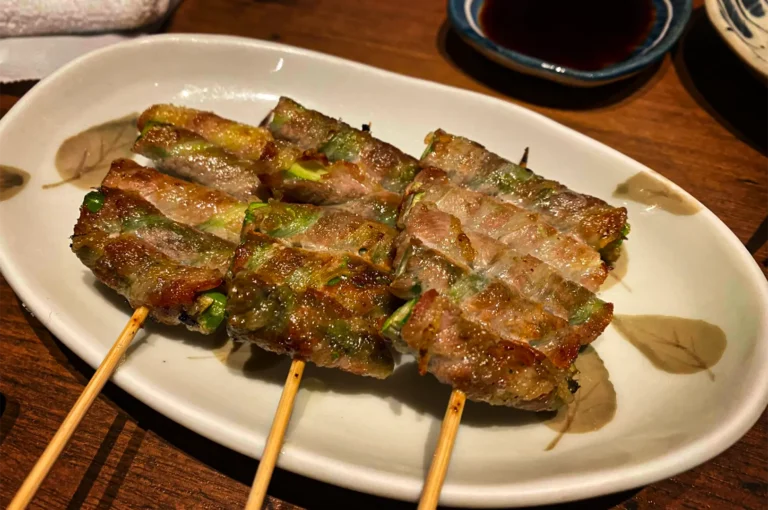
The preparation of the grilled chicken relies on constant attention. The chef rotates each skewer by hand, moving them across different heat zones to control fat rendering and surface caramelization. The goal is to maintain internal juiciness while achieving a crisp exterior. Every detail, from the amount of salt applied to the timing of the service, is calculated to ensure the food is served at its optimal temperature.
Navigating the Course: From Chicken Thigh to Offal
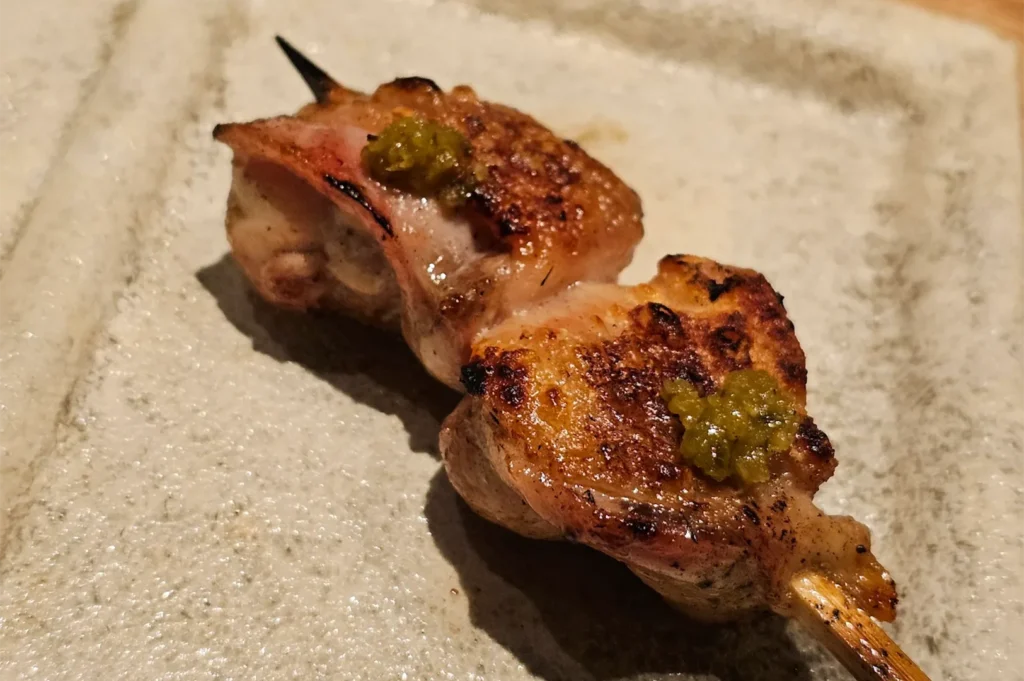
The menu emphasizes a nose-to-tail approach, utilizing the entire bird. I noted that the sequence moves systematically through different cuts, balancing lean meats with richer, fattier portions.
The chicken thigh (momo) was served early in the meal. It demonstrated a balanced ratio of meat to rendered fat, showcasing the baseline capability of the grill. Following this, delicate cuts like the chicken breast (sasami) were served lightly cooked, preserving their moisture.
As the course progressed, more specialized items were introduced. The chicken skin (kawa) was grilled until crisp, while the chicken neck provided a denser, more muscular bite. For those looking forward to offal, the chicken heart (hatsu) offered a firm texture, and the liver (reba) was presented with a soft, slightly creamy consistency.
A definitive highlight of the dinner was the tsukune, a seasoned chicken ball. It was glazed with a sweet-savory tare sauce and paired with a rich, raw egg yolk. The tare sauce, built from soy sauce, mirin, sake, and sugar, added depth without overwhelming the natural flavor of the meat.
Balancing the Meal with Grilled Vegetables
To prevent palate fatigue, the omakase structure incorporates items beyond meat. I found the inclusion of grilled vegetables to be a necessary and effective transition between the richer courses.
These vegetables are treated with the same level of care as the proteins. Lightly seasoned and grilled over the charcoal, they provide a textural contrast and a clean flavor profile that resets the palate. This thoughtful pacing is one of the things that separates the finest yakitori courses from standard casual dining.
Donabe Rice and Rice Accompaniments
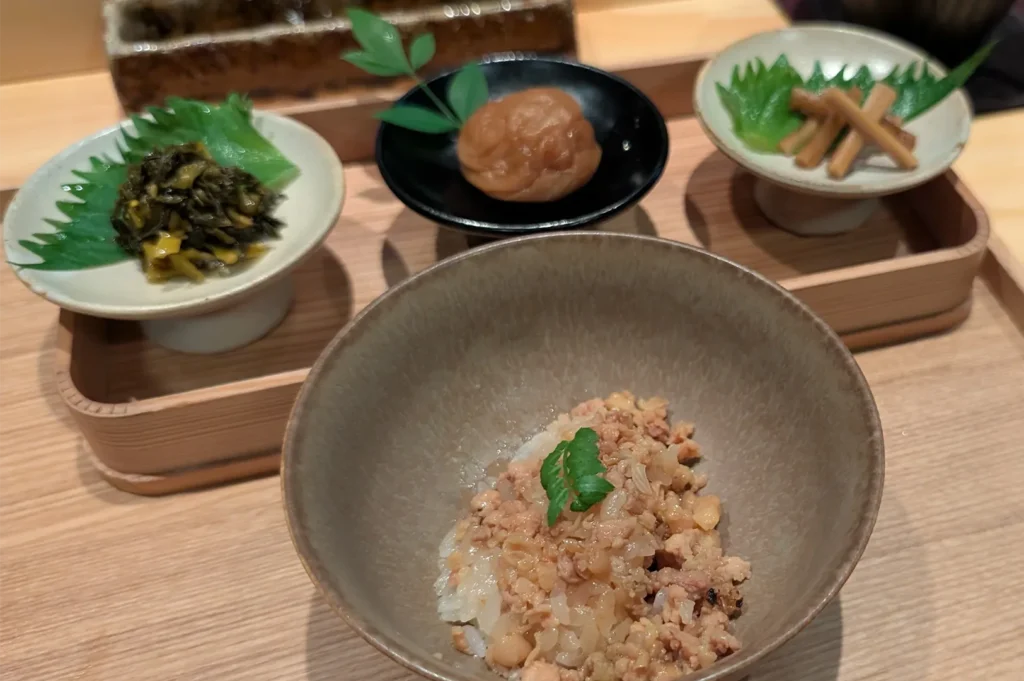
Toward the end of the meal, the focus shifts to carbohydrates to ground the experience. The kitchen prepares donabe rice, cooked slowly in a traditional Japanese earthenware pot.
The rice accompaniments vary depending on the season, but they consistently offer a comforting conclusion to the sequence of skewers. Paired with a warm, restorative soup, this final savory phase ensures that the diner is satisfied without feeling overly encumbered. The careful progression from light skewers to rich glazes, ending with rice, demonstrates the chef’s understanding of menu architecture.
Torikami Singapore: Service, Space, and Practical Details
The service at Torikami is attentive but unobtrusive. The staff presents each skewer individually, often providing brief instructions on how to eat it to maximize flavor. Because timing is critical, it is recommended that diners consume each bite immediately after it is served.
Pricing for the omakase menu generally ranges from SGD 120 to 180++ per person. While some diners may find this price point high for skewers, the cost reflects the ingredient quality, the specialized binchotan technique, and the intimate setting. It is an experience-driven meal rather than a volume-focused one.
For those looking to visit, I advise checking their Facebook page or official contact site for availability. Reservations are essential, as the counter seating capacity is low and prime dates, such as weekends in February, are often booked well in advance.
For those interested in exploring more options, Best Yakitori offers a comprehensive guide to the best yakitori experiences in Singapore.